

What to Do When a Client Doesn't Like Your Design — and How to Move Forward
Every designer remembers the first time it happened. The presentation you were proud of. The concept you'd thought about deeply. And then — the client's response that made your stomach drop.
Maybe it was a flat 'this isn't what I was imagining.' Maybe it was a list of things they wanted changed until the design was unrecognisable. Maybe it was just a silence that told you everything.
If you've been in practice for any length of time, you've been here. And if you're newer to it, you will be. It's not a sign that you're a bad designer. It's a sign that you're a working designer — and working designers, at some point, miss the mark.
What separates the designers who handle this well from those who don't isn't talent or experience. It's having a clear, professional process for what to do next. That's what this guide covers.

A client rejecting your design is not the end of the project. How you respond to it usually determines whether the project ends well or badly.
Step One: Don't React. Respond.
Your immediate instinct when a client rejects your work will be one of a few things: defensiveness, the urge to over-explain, a desire to immediately capitulate and change everything, or a sinking feeling that collapses your confidence entirely. None of these serve you or your client.
The most important thing you can do in the moment a client says they don't like your design is to not react immediately. Pause. Acknowledge. And ask the right questions before you say or do anything else.
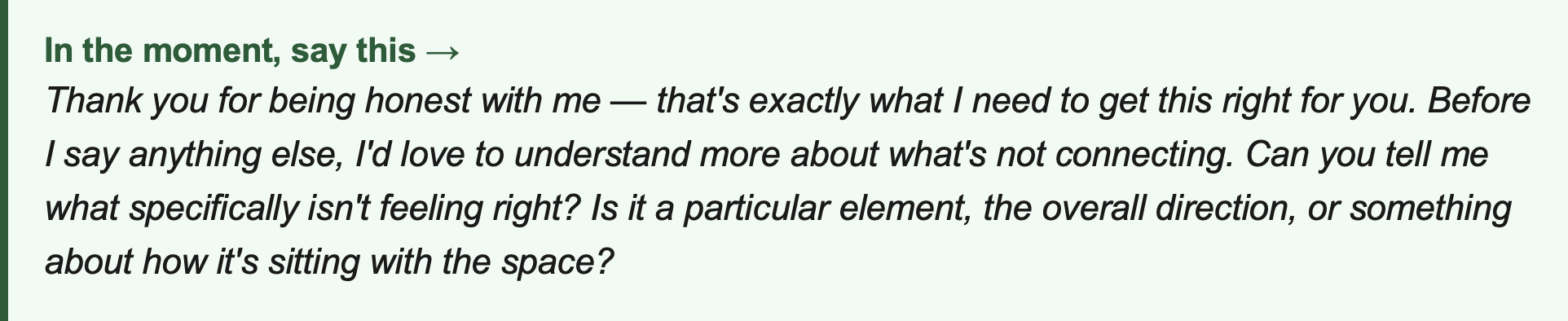
This response does several things at once. It thanks them for honesty rather than treating it as an attack. It positions you as someone who wants to get it right rather than someone who wants to be right. And it buys you the information you actually need to move forward intelligently.
Diagnose Before You Respond: Three Types of Rejection
Not all design rejections are the same. Before you decide how to respond, you need to understand what you're actually dealing with. Most rejections fall into one of three categories — and each one calls for a different approach.
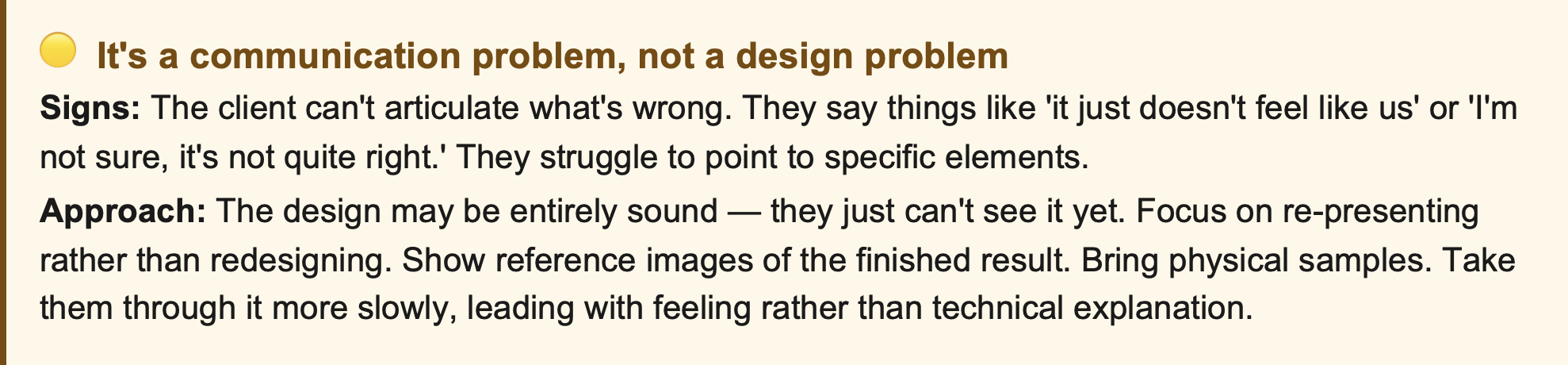
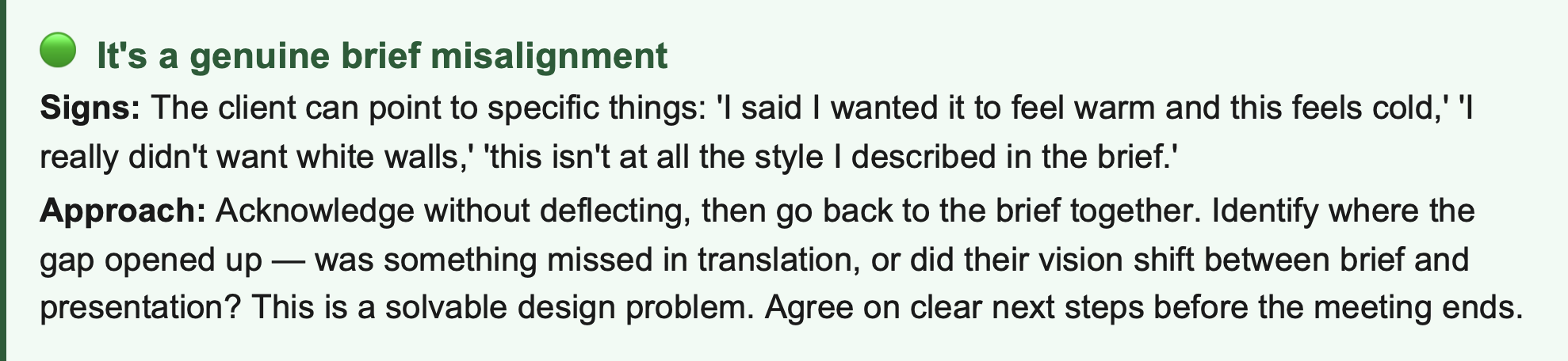
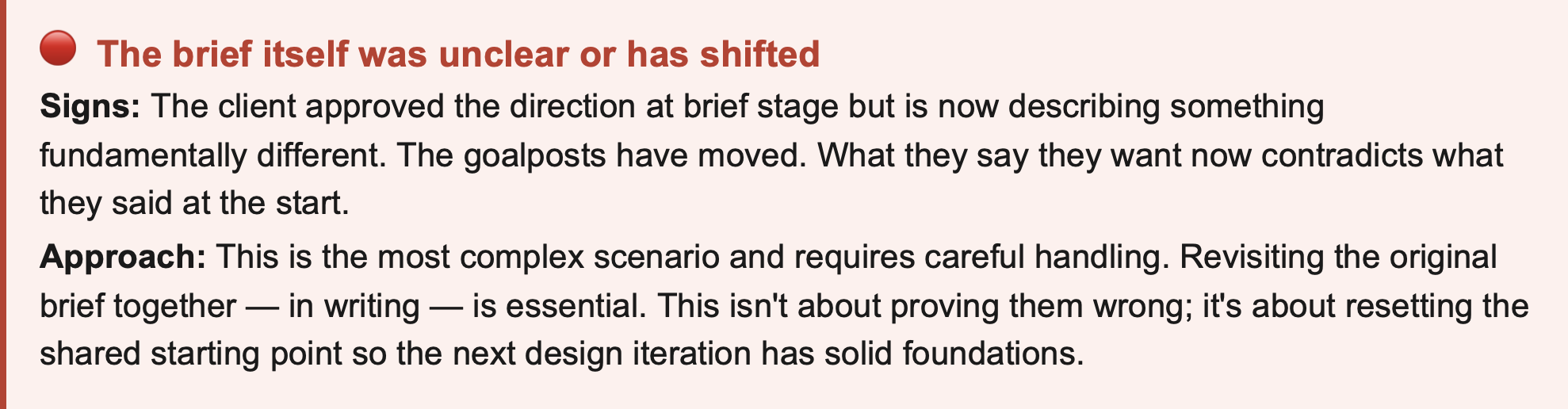
The Recovery Process: Moving Forward Without Losing Ground
Here's what a structured week looks like for a designer running three to four projects simultaneously. Adapt it to your own working patterns — the point isn't the specific schedule, it's the principle of intentional time allocation.
Get the feedback in specific, actionable terms
Vague feedback ('I just don't love it') cannot be acted on. Before the meeting ends, push gently for specifics. What elements are definitely wrong? What elements are definitely right? Is the overall direction workable with modifications, or does it need a fundamental rethink? Getting this clarity now prevents another wasted iteration.
Revisit the brief together — out loud
Take the original brief and go through it point by point with the client. 'You said you wanted X — here's where we addressed that. You said you wanted Y — here's where we went in a different direction and why.' This process either confirms that the design is right and the communication failed, or it surfaces the genuine gaps. Either way, you both leave with clarity.
Agree on scope before you redesign anything
Before you go away and rework the design, agree clearly on what changes are in scope — and what sits outside the original brief or agreed revision rounds. If significant redesign is required due to a brief change on the client's side, that may represent additional work that warrants a conversation about fees. Get this agreed before you do the work, not after.
Present the revised design with more scaffolding
The second presentation needs to work harder than the first. Refer back to the brief explicitly at the start. Walk through each decision with a clear 'you said X, so we did Y' rationale. Show more visuals, more reference images, more physical samples. The goal is to make it impossible for the client to feel uncertain.
Close the loop — get explicit sign-off
At the end of the revised presentation, don't leave with a vague 'let me know what you think.' Get a clear response: 'Are you happy to move forward with this direction?' A definite yes or a definite set of specific remaining changes. Ambiguity at this stage costs you later.
FIND THE RIGHT TEMPLATES FOR YOUR INTERIOR DESIGN PROJECTS
When You Genuinely Believe the Client Is Wrong
Sometimes the design is right and the client's objections are based on a fear of something new, an aesthetic comfort zone they're reluctant to leave, or an influence from someone outside the project who doesn't share your brief. In these situations, rolling over immediately isn't always the right answer.
When to stand your ground
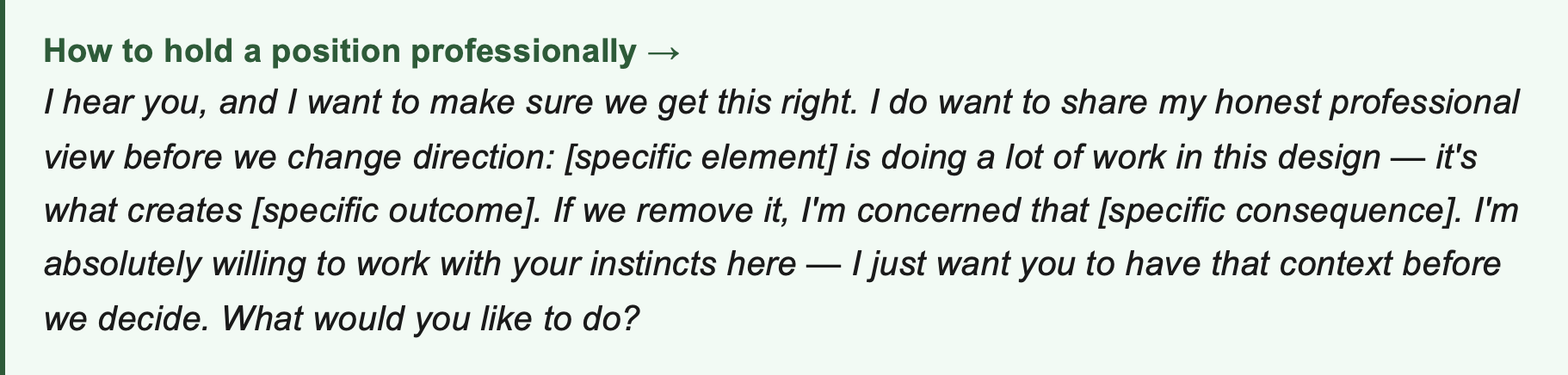
If the decision the client objects to is fundamental to the success of the design — if changing it would genuinely compromise the outcome — it's your professional responsibility to say so clearly, once, and explain why. Not repeatedly. Not defensively. Once, with evidence.
When to let it go
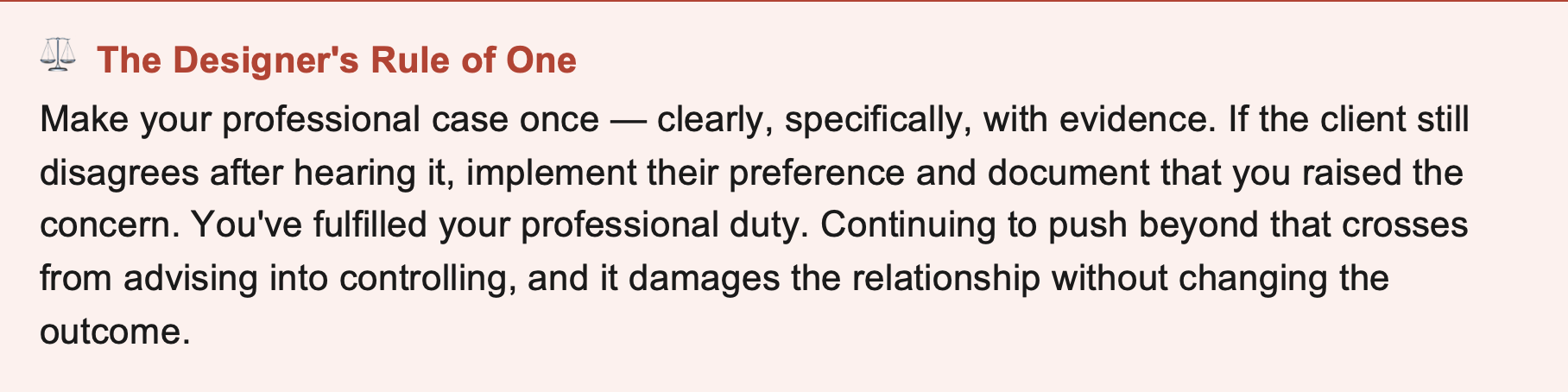
If the client's preference, while not what you'd choose, doesn't fundamentally compromise the project — let it go. Pick your battles. A designer who fights every client preference becomes exhausting to work with. Choosing which decisions to defend and which to release is itself a professional skill.
What This Moment Is Actually About
A client rejecting your design feels personal because the work is personal. You put yourself into it. That's not a weakness — it's what makes the work good.
But the moment it's in front of a client, it becomes something else: a proposal for how they will live. And how they'll live is ultimately their decision, not yours. Your role is to bring expertise, vision, and professional judgment to bear in service of their life — not to impose your vision on it.
The designers who handle rejection most gracefully are the ones who've genuinely internalised this. They feel the sting of it — and they move forward anyway, because they're more invested in the client's outcome than in being right.
The best response to 'I don't love it' is curiosity, not defensiveness. Nine times out of ten, the information you get from that conversation improves the design.
Prevention: How to Reduce Rejections Before They Happen
The best time to avoid a rejection is before the presentation. These habits won't eliminate them — nothing will — but they make them significantly less likely.
Check in mid-concept, not just at the end — a quick message with a mood board or reference images during concept development catches misalignments early
Refer back to the brief explicitly in every presentation — 'you asked for X, here's X' removes most 'this isn't what I imagined' responses
Ask clients to share visual references before the brief is finalised — images communicate preference more reliably than words
Name what you're about to show before you show it — 'this is more minimal than you might expect — let me explain why before your first reaction' primes the right mindset
Manage the emotion of the reveal — the moment of presentation is high-stakes for clients too. Slow down, narrate, don't rush to the finish
A rejection at the presentation is almost always the result of something that happened — or didn't happen — at the brief. The investment in getting the brief right is the most effective rejection prevention there is.
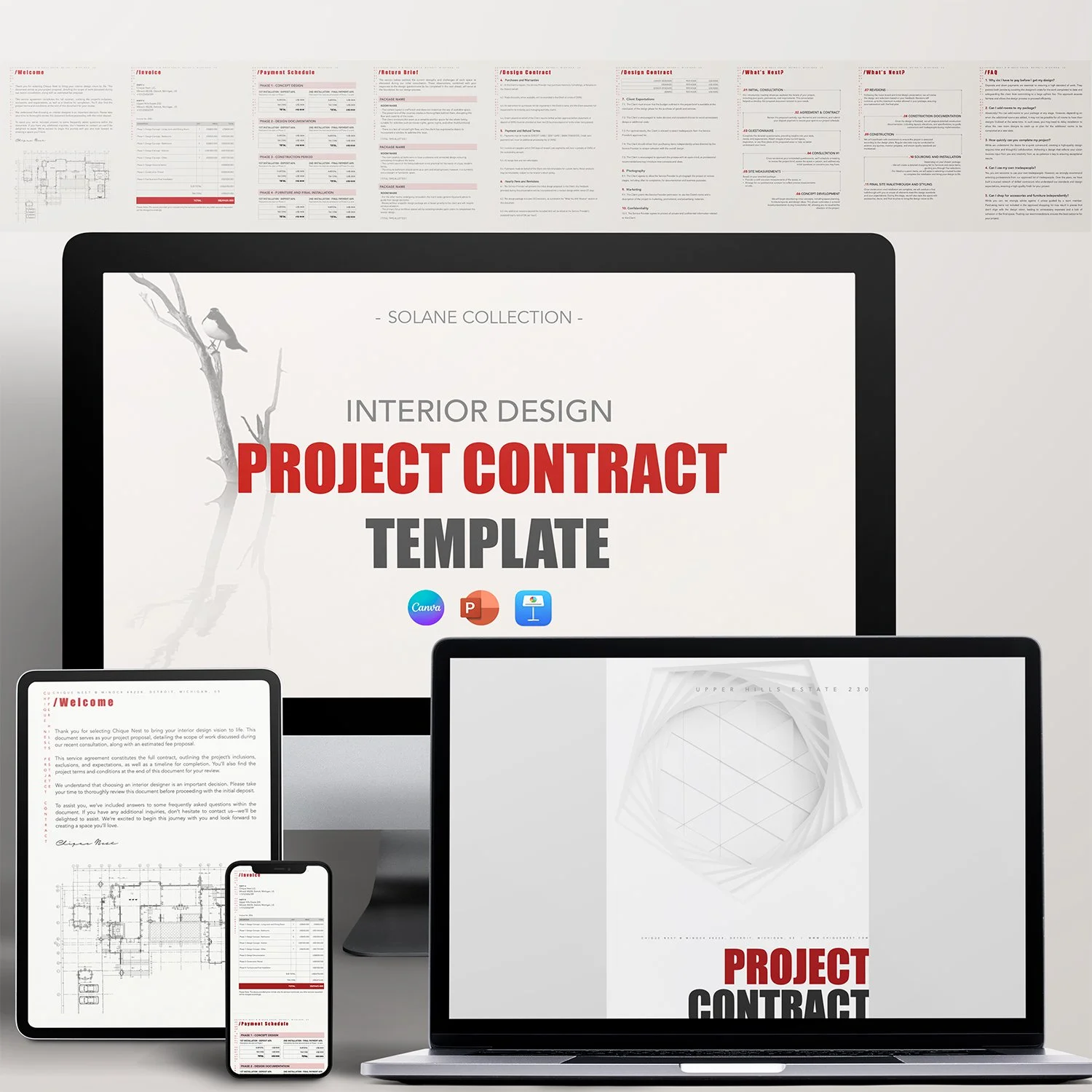
A design that's presented professionally has a better chance of landing. Chique Nest's client presentation templates give your concepts the visual context that helps clients understand, feel confident about, and say yes to your work.

Stop sending clients a plain PDF and hoping it lands. The Chique Nest Project Proposal Template gives you a beautifully laid-out proposal that shares your inspiration, goals, requirements, mood board, and timeline — everything a client needs to say yes.
Tells the Full Design Story: From inspiration and design goals through to project requirements and mood board, clients see your thinking, not just your pricing.
Fully Customizable: Easily tailor fonts, colors, images, and layouts in Canva, PowerPoint, or Keynote to reflect your brand's unique identity.
Visual Project Timeline: A clean 5-phase timeline graphic so clients know exactly what to expect and when.
Past Work Built In: Dedicated "Our Works" pages with room to showcase real projects and client testimonials.
Save Time and Effort: Stop rebuilding a proposal deck from scratch for every new lead — just update the project details.
—— 📨 What’s Included in the download?
You’ll receive:
✅ 5 Files Total
• PDF with Download Link + Instruction Manual
• 1 Keynote Template
• 1 PowerPoint Template
• 1 Canva Template
• 1 PDF Example File by Chique Nest
✅ 17 Fully Editable Pages
—— 🖌️ What’s inside the template?
This comprehensive project proposal includes every section you need to pitch and win a new project:
✔️ Welcome
✔️ Finding Inspiration
✔️ Design Goals
✔️ Project Requirements
✔️ Mood Board
✔️ Project Timeline
✔️ Terms
✔️ Design Process
✔️ Next Steps
✔️ Our Works
✔️ Meet Our Team
✔️ Contact Us
—— 📂 File Format & Compatibility:
Available in Widescreen (16:9) format, this template is compatible with:
✔️ Canva (requires a free Canva account)
✔️ PowerPoint
✔️ Keynote
All elements are fully customizable, including fonts, text, images, and branding.