

The Interior Designer's Guide to Raising Your Rates Without Losing Clients
There's a conversation that almost every interior designer has with themselves at some point — usually late at night, after a long day on a project that paid far less than it was worth.
It goes something like: "I need to charge more. I know I need to charge more. But what if they say no? What if I lose the client? What if I'm not worth it yet?"
And then nothing changes. The rates stay the same. The workload stays the same. The quiet resentment toward underpriced projects quietly grows.
This guide is for the designer who already knows they need to raise their rates — and needs the practical framework, the mindset shift, and yes, the actual words to say to make it happen without the relationship falling apart.

You are not too expensive. You are probably just priced for a client who isn't right for you anymore.
Why So Many Designers Undercharge (And Keep Doing It)
Undercharging isn't usually about ignorance. Most designers know, roughly, that they're not charging enough. The issue is almost always psychological — and it shows up in a few predictable patterns.
The imposter pattern
"I'm not established enough yet." "There are more experienced designers who charge that." "My portfolio isn't there yet." This internal narrative keeps rates anchored to self-perception rather than market value. The problem is that self-perception is always running about two years behind reality — the designer who feels like a junior is often already delivering senior-level work.
The relationship protection pattern
You've worked with a client for two years. They're lovely. Raising your rates feels like doing something to them — like punishing loyalty. So you keep their rate frozen while your costs, time, and expertise all quietly increase. This is generous. It is also, over time, unsustainable.
The fear-of-no pattern
This one is the most common. The rate conversation feels like a job interview where the answer might be rejection. So you either don't have the conversation, or you pre-emptively discount before anyone has even pushed back. You negotiate against yourself.
The designers who charge the most aren't the most talented — they're the most confident in the value they deliver. Confidence, in business, is a skill you can build.
The Real Question Isn't 'Can I Raise My Rates?' — It's 'What Justifies It?'
Raising your rates without anything changing is just hoping no one notices. The designers who raise their rates successfully do it in the context of something — a stronger portfolio, a new service offering, a more professional client experience, a clearer positioning. The rate increase is the reflection of genuine growth, not a random number change.
So before we get to the how, it's worth asking: what has changed or improved that makes a higher rate justified?
More experience — projects completed, problems solved, expertise deepened
Better positioning — clearer niche, stronger portfolio, more targeted client base
Improved deliverables — more professional proposals, presentations, documentation
Market rates have moved — you haven't updated your pricing in 12+ months
Your costs have increased — time, tools, team, or overheads
Your demand has increased — you're turning away work or consistently fully booked
If two or more of these apply to you, a rate increase isn't just justified — it's overdue.
FIND THE RIGHT TEMPLATES FOR YOUR INTERIOR DESIGN PROJECTS
The Three Fears — Addressed Honestly
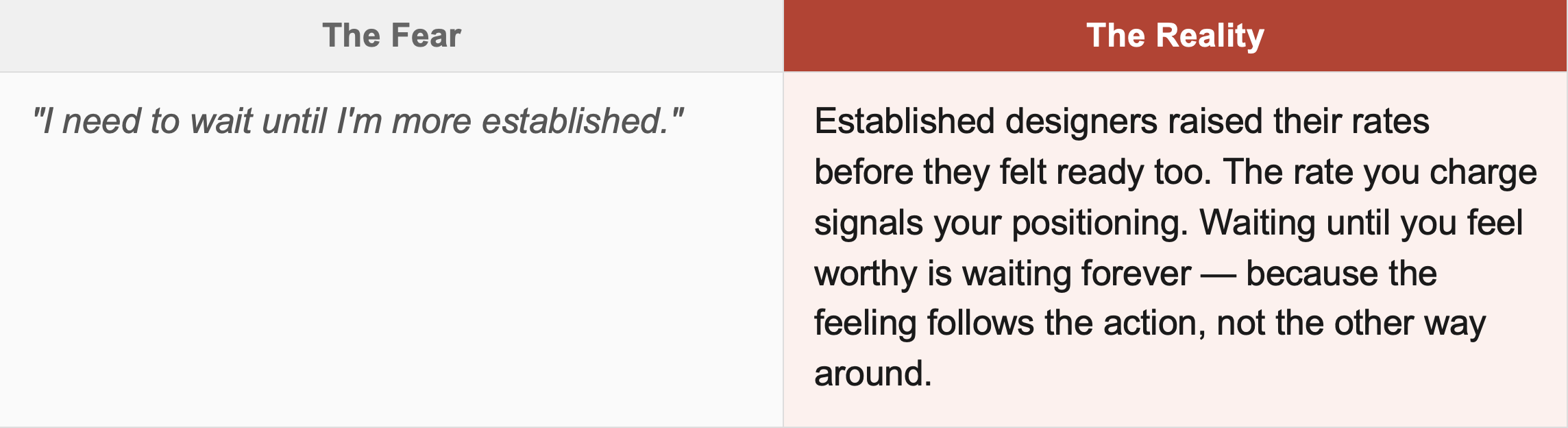
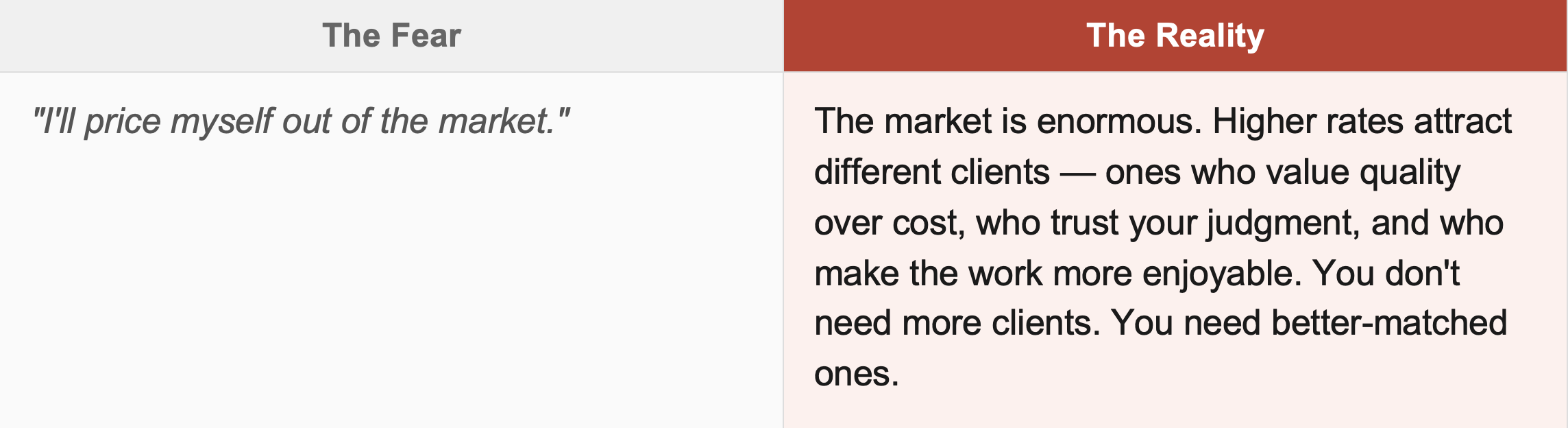
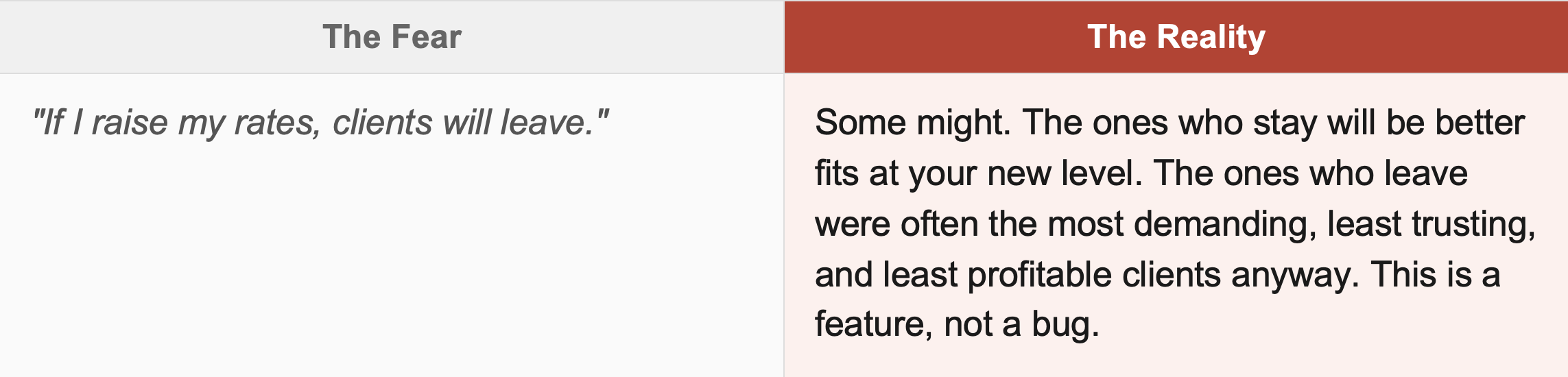
How to Actually Do It: A Step-by-Step Approach
1 — Decide on your new rate — and commit to it
Do your research first. Look at what designers at your experience level and positioning are charging in your market. Factor in your actual hours, overheads, and the value you deliver. Then pick a number that feels slightly uncomfortable — that discomfort is usually a sign you're in the right territory. Write it down. Say it out loud. Get comfortable with it before you're in front of a client.
2 — Apply it to all new clients immediately
The cleanest way to raise your rates is to simply start charging the new rate for every new enquiry. No announcement, no explanation required. New clients don't know what you used to charge. This also lets you road-test the conversation before having it with existing clients.
3 — Give existing clients advance notice — in writing
For ongoing or returning clients, give 60–90 days notice of a rate change. This is professional, respectful, and gives them time to budget. Frame it as a business update, not an apology. You're informing them, not asking permission.
4 — Anchor the increase in something real
Whenever possible, connect the rate change to something tangible — a new service offering, updated deliverables, an improved process. You're not just charging more. You're delivering more. That framing makes the increase feel earned rather than arbitrary.
5 — Stop discounting as a default
Every time you discount without being asked, you train clients to expect it — and you undermine the rate you just set. If a client pushes back on price, the answer isn't immediately lower. It's a conversation about scope: what can we adjust to bring this to the budget you have?
What Actually Changes When You Start Charging More
This part surprises a lot of designers. When you raise your rates and the right clients start saying yes:
You work with fewer clients — but on bigger, more satisfying projects
Clients trust your decisions more — they've invested seriously and want to get it right
The work itself gets better — you have more time per project, more budget to work with, more creative latitude
You stop resenting your work — one of the quietest but most important changes
Your portfolio improves — better-funded projects produce better outcomes
Referrals come from better-matched clients — like refers like
Higher rates don't just change your bank balance. They change the quality of every project you work on, every client relationship you have, and the way you feel about your business.
On the last note
The conversation you're afraid to have is almost never as bad as the version you've been rehearsing in your head. Most clients who respect your work will accept a rate increase — especially when it's communicated professionally and with enough notice.
And the ones who don't? That's information too. It tells you where the relationship was really anchored — and gives you the clarity to build towards clients who value you at the level you deserve.
Your rates are not just a number. They're a statement about what your time and expertise are worth. Make sure that statement is honest.
The best time to raise your rates was last year. The second best time is your next proposal.
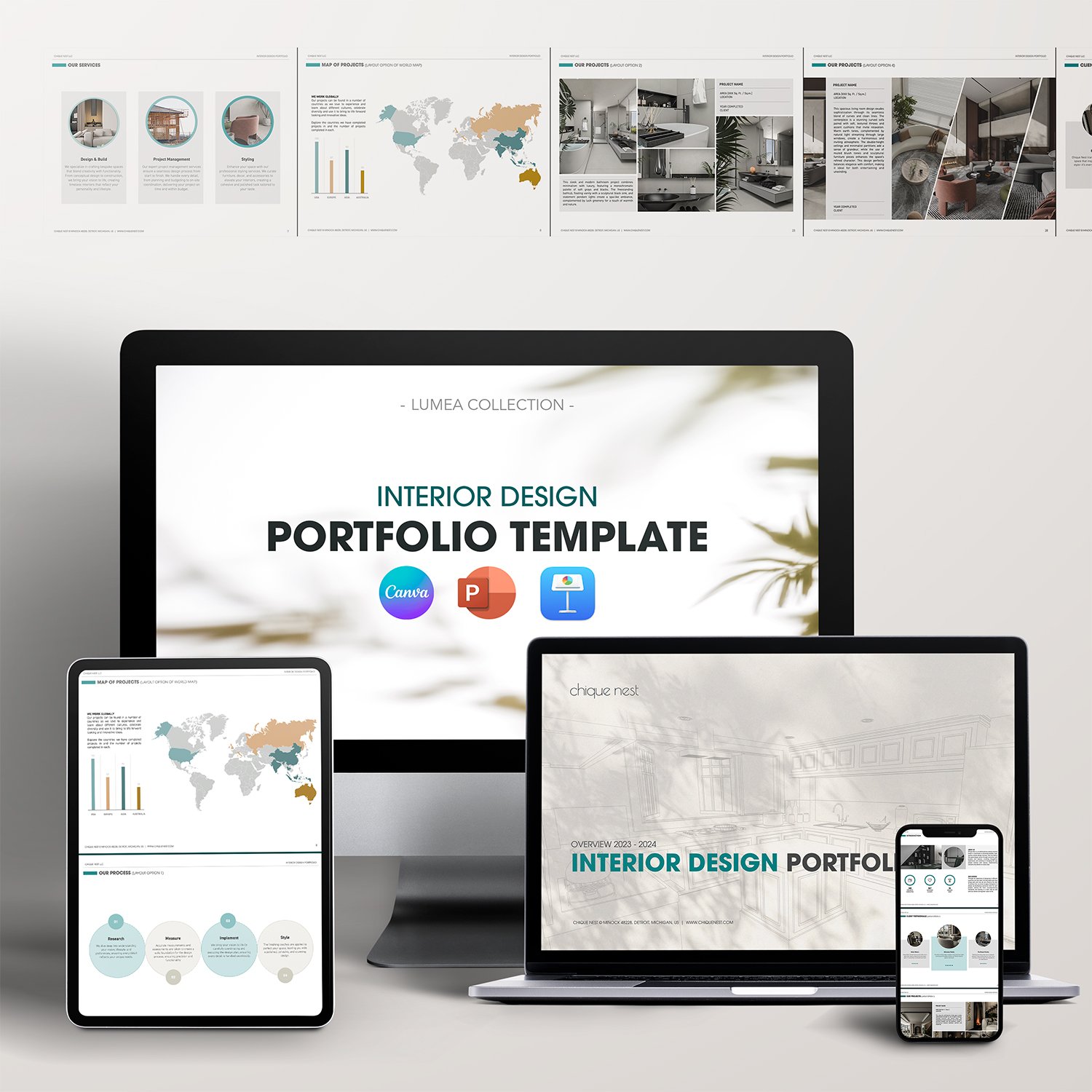
Higher rates need to be backed up by a professional client experience from the very first touchpoint. Chique Nest's proposal, onboarding, and fee templates are designed to make your business look — and feel — worth every penny.

Simplify your client onboarding process and clearly showcase your offerings with The Lumea Collection Packages & Pricing Template. Designed specifically for interior designers, this template provides a polished and professional way to present your services, pricing, and packages, helping you stand out and build trust with prospective clients.
Clearly Communicate Your Services: Highlight your package options, e-packages, and pricing details in a clean and organized format.
Fully Customizable: Easily tailor fonts, colors, images, and layouts in Canva, PowerPoint, or Keynote to reflect your brand’s unique identity.
Comprehensive and Client-Focused: Cover every detail, from client testimonials to package comparisons, ensuring transparency and building confidence.
Save Time and Effort: With thoughtfully designed layouts and pre-written content, you can quickly create stunning presentations that make a lasting impression.
Professional Presentation: Showcase your expertise and build trust by providing a clear and visually appealing document that simplifies decision-making for your clients.
—— 📨 What’s Included in the download?
You’ll receive:
✅ 12 Files Total
• PDF with Download Link + Instruction Manual
• 4 Keynote Files
• 4 PowerPoint Files
• 2 Canva Templates
• 1 PDF File
✅ 16 Fully Editable Pages in Two Beautiful Themes:
1. Golden Elegance
2. Turquoise Modern
—— 🖌️ What’s inside the template?
This comprehensive packages and pricing template includes all the sections you need to professionally present your interior design business:
✔️ Welcome
✔️ About Us
✔️ Client Testimonials
✔️ Our Team
✔️ What’s Next?
✔️ What to Expect
✔️ Packages Options
✔️ E-Packages Options
✔️ Packages Comparison
✔️ E-Packages Comparison
✔️ Questions & Answers
✔️ Contact Us
—— 📂 File Format & Compatibility:
Available in both Standard (4:3) and Widescreen (16:9) formats, this template is compatible with:
✔️ Canva (requires a free Canva account)
✔️ PowerPoint
✔️ Keynote
All elements are fully customizable, including fonts, text, images, and branding.