

Email Marketing for Interior Designers: How to Build a List and Actually Use It
Social media gets all the attention. The follower counts, the viral moments, the algorithm chasing — it's loud and visible and it feels like where the action is.
But ask any designer who has been in business for a few years which marketing channel they'd keep if they could only keep one — and most of them will say email. Every time.
Email is quieter than social. It doesn't trend. Nobody goes viral in an inbox. But it consistently outperforms every other channel for one simple reason: the people on your list actually asked to hear from you. They opted in. They gave you their attention deliberately — and that makes every email you send worth more than a hundred posts seen by people scrolling past without stopping.
This guide is for interior designers who've been meaning to 'do email marketing' for a while — and haven't quite started. Let's fix that.

Your Instagram following is rented. Your email list is owned. And owned audiences are the only ones you can actually count on.
Why Email Outperforms Social Media for Interior Designers
This isn't an argument for abandoning social media — it's an argument for not relying on it alone. Here's why email deserves a place in every designer's marketing toolkit:
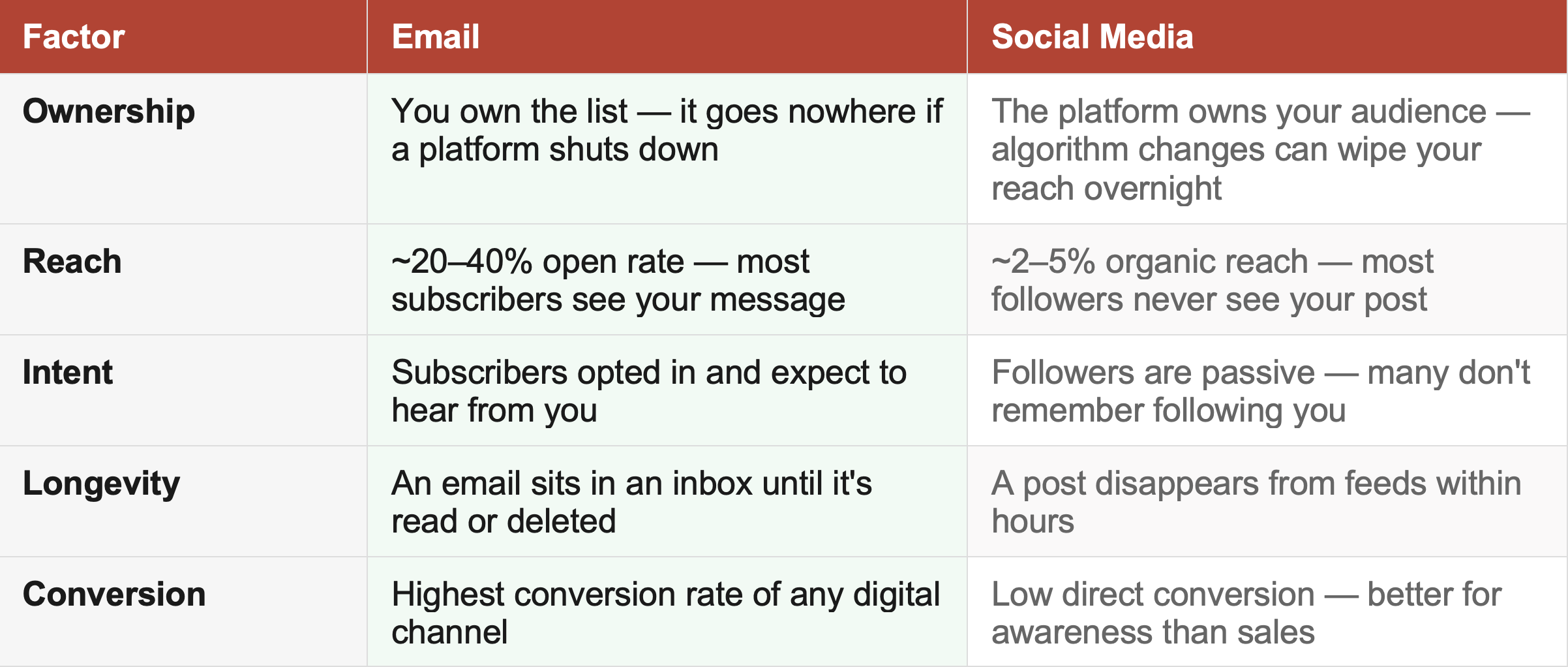
The argument isn't either/or. Social builds awareness, email builds relationships. And relationships convert.
FIND THE RIGHT TEMPLATES FOR YOUR INTERIOR DESIGN PROJECTS
Part One: Building Your List (The Right Way)
A list built slowly with the right people is worth infinitely more than a large list built fast with the wrong ones. The goal isn't numbers — it's qualified, engaged subscribers who could plausibly become clients or refer clients to you.
Start with a lead magnet worth having
Nobody gives away their email address for nothing. You need to offer something genuinely useful in exchange — something a potential client would actually want. The best lead magnets for interior designers are:
A room planning guide — a PDF walking through how to approach a specific space (living room, kitchen, bedroom)
A sourcing checklist — what to look for when choosing a sofa, kitchen brand, or lighting supplier
A project cost breakdown — what a real renovation actually costs, broken down honestly
A design style quiz — helps potential clients discover their aesthetic preference
A free consultation booking — direct, low-friction, and filters for people ready to have the conversation
🎁 The Lead Magnet Test
Before creating anything, ask: would I pay £5 for this? If yes, it's a good lead magnet. If it's a PDF of generic advice that took 20 minutes to write, it won't convert — and it'll attract subscribers who don't value your expertise. Make it something you're genuinely proud to send.
Where to collect sign-ups
Once you have a lead magnet, make it easy to find:
A dedicated sign-up section on your website homepage — above the fold if possible
A pop-up or slide-in on your blog posts after a reader has scrolled 60% of the way through
Your Instagram bio link — use a link-in-bio tool with email capture as the first option
A CTA at the end of every TikTok or Reel that mentions the free resource
Your email signature — the most overlooked sign-up opportunity in any service business
Past clients are your most valuable subscribers
Don't forget the people who already know and trust you. With their permission, add past and current clients to your list. These are warm contacts who have experienced your work firsthand — their word-of-mouth referrals are often triggered by a well-timed email that reminds them you exist.
Part Two: What to Actually Send
This is where most designers stall. The list gets built, the platform gets set up — and then nothing goes out because they can't figure out what to say. Here's the answer: send something genuinely useful, in your own voice, on a consistent schedule. That's it. The overthinking is the problem, not the content.
Your subscribers don't need polished marketing copy. They need to feel like they're hearing from someone who knows their stuff and isn't wasting their time.
10 Email Ideas You Can Use Right Now
1 — The Project Reveal
What to include: Share photos of a recently completed project with a short story about the brief, the challenge, and the outcome. 150–200 words max.
Why send it: Shows your work in context. More personal than a portfolio page and more likely to be forwarded.
2 — The Mistake I See All the Time
What to include: One common design mistake clients make — layout, lighting, scale — and how you'd fix it. Include a before and after if you have one.
Why send it:Positions you as an expert. Highly shareable. Often triggers replies from people who recognise themselves.
3 — What I'm Loving Right Now
What to include: Three things you're currently specifying, sourcing, or obsessing over — a material, a supplier, a technique. Keep it personal.
Why send it:Low effort, high personality. Feels like a recommendation from a friend who happens to be an expert.
4 — The Question I Get Asked Every Week
What to include: Pick the most common question from discovery calls or DMs. Answer it thoroughly in the email.
Why send it:Serves the subscriber directly while demonstrating depth of knowledge. Great SEO fodder if repurposed as a blog post.
5 — Behind the Brief
What to include: Walk through how you approach a specific type of project or brief — what questions you ask, what constraints you work with, what your process looks like.
Why send it:Builds understanding of the value you provide. Helps potential clients self-qualify before enquiring.
6 — The Honest Budget Breakdown
What to include: Share approximate cost breakdowns for a project type — kitchen renovation, living room refresh, bedroom redesign. Be real about what things cost.
Why send it:One of the most opened email types in the design space. Transparency builds enormous trust.
7 — A Client Win (with permission)
What to include: Share a short story about a challenge you solved for a client — the problem, your approach, the outcome. No names needed.
Why send it:Social proof in narrative form. Far more persuasive than a testimonial quote.
8 — Availability Update
What to include: Let your list know when you have a project slot opening up — and what kind of project you're looking for.
Why send it:The most direct path from email list to client enquiry. Subscribers who are planning a project will act on this.
9 — What I Wish Clients Knew Before We Started
What to include: Honest advice about the design process — timelines, decisions, what to expect. The kind of thing that would have made your last project smoother.
Why send it: Attracts the right clients by setting expectations. Repels the wrong ones by being honest. Both are valuable.
10 — The Personal One
What to include: Something from your life, your perspective, your process that has nothing to do with a specific project. Why you do this work. What changed your mind about something. A book that shifted how you design.
Why send it:Builds the human connection that makes people choose you over a designer with a similar portfolio. Don't skip these.
How Often Should You Send?
The most common question — and the most overanalysed one. Here's the simple answer: once or twice a month is the sweet spot for most interior designers. Enough to stay top of mind, not so much that you become a chore to unsubscribe from.
More important than frequency is consistency. A subscriber who hears from you every third Wednesday of the month knows what to expect — and that predictability builds a habit of opening your emails. Sporadic sending — three in one week, then silence for two months — trains people to ignore you.
📅 The One-Email Rule
When you're just starting out, commit to one email a month. Not a newsletter — one email, one topic, one CTA, under 300 words. Do that for three months before adding more. The designers who build lasting lists start with less and stay consistent, rather than launching with a burst of energy that fades by month two.
The Tools: Keeping It Simple
You don't need an expensive, complicated platform. For most interior designers, one of these three will do everything you need:
Mailchimp — free up to 500 subscribers, easy to use, good templates. Best for absolute beginners.
Flodesk — flat monthly fee, beautiful design-forward templates, no subscriber limits. Popular with creative businesses.
Kit (formerly ConvertKit) — more powerful automations, better for segmenting by client type or interest. Good when your list grows.
Start with whichever feels least intimidating. The platform matters far less than the habit of actually sending.
The One Thing That Will Make Your List Work
All of this — the lead magnet, the structure, the ideas, the platform — means nothing if the emails don't sound like you. The interior designers who build genuinely valuable email lists aren't doing it with better marketing copy. They're doing it by showing up as themselves: with opinions, with honesty, with the kind of perspective that only comes from years of doing this work.
Your subscribers followed you because of who you are and what you know. Write like that. Don't write like a brand newsletter. Write like a designer who has something worth saying.
The list will grow. The relationships will deepen. And when someone on that list is finally ready to start a project, you'll be the only person they think of — because they've been hearing from you for months.
The best email you'll ever send is the one a subscriber forwards to a friend and says: 'This is the designer I'm using. You should see their emails.'
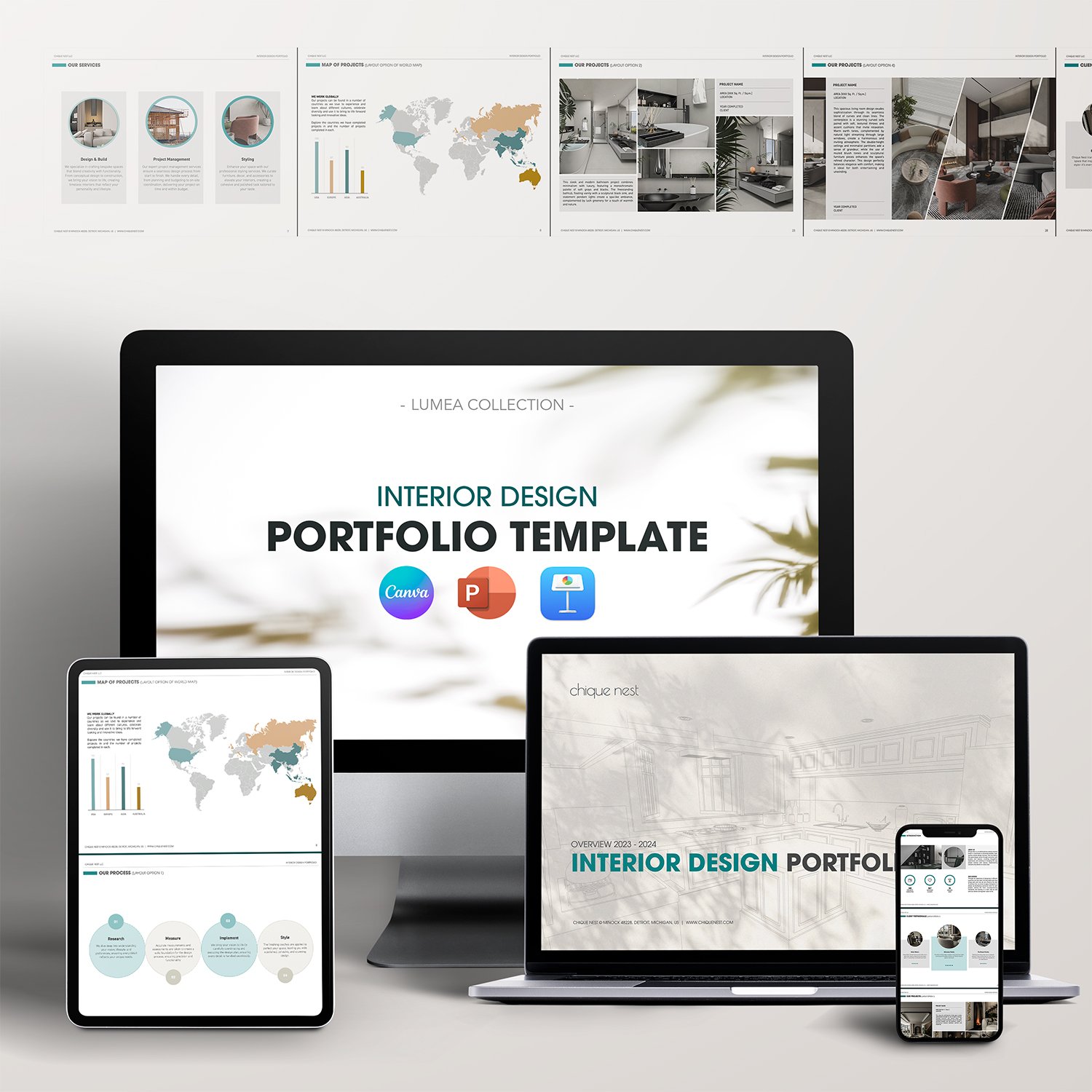
The best email lead magnets are genuinely useful — a design checklist, a room planning guide, a sourcing resource. Chique Nest's templates and tools give you professional content to offer as incentives that turn casual visitors into subscribers, and subscribers into clients.

Simplify your client onboarding process and clearly showcase your offerings with The Lumea Collection Packages & Pricing Template. Designed specifically for interior designers, this template provides a polished and professional way to present your services, pricing, and packages, helping you stand out and build trust with prospective clients.
Clearly Communicate Your Services: Highlight your package options, e-packages, and pricing details in a clean and organized format.
Fully Customizable: Easily tailor fonts, colors, images, and layouts in Canva, PowerPoint, or Keynote to reflect your brand’s unique identity.
Comprehensive and Client-Focused: Cover every detail, from client testimonials to package comparisons, ensuring transparency and building confidence.
Save Time and Effort: With thoughtfully designed layouts and pre-written content, you can quickly create stunning presentations that make a lasting impression.
Professional Presentation: Showcase your expertise and build trust by providing a clear and visually appealing document that simplifies decision-making for your clients.
—— 📨 What’s Included in the download?
You’ll receive:
✅ 12 Files Total
• PDF with Download Link + Instruction Manual
• 4 Keynote Files
• 4 PowerPoint Files
• 2 Canva Templates
• 1 PDF File
✅ 16 Fully Editable Pages in Two Beautiful Themes:
1. Golden Elegance
2. Turquoise Modern
—— 🖌️ What’s inside the template?
This comprehensive packages and pricing template includes all the sections you need to professionally present your interior design business:
✔️ Welcome
✔️ About Us
✔️ Client Testimonials
✔️ Our Team
✔️ What’s Next?
✔️ What to Expect
✔️ Packages Options
✔️ E-Packages Options
✔️ Packages Comparison
✔️ E-Packages Comparison
✔️ Questions & Answers
✔️ Contact Us
—— 📂 File Format & Compatibility:
Available in both Standard (4:3) and Widescreen (16:9) formats, this template is compatible with:
✔️ Canva (requires a free Canva account)
✔️ PowerPoint
✔️ Keynote
All elements are fully customizable, including fonts, text, images, and branding.