

How to Professionally End a Client Relationship (Without Burning Bridges)
Nobody talks about this enough. Interior design education — formal or otherwise — covers concept development, space planning, materials, client onboarding. It almost never covers what to do when a client relationship stops working and you need to end it with your reputation intact.
Yet every working designer eventually faces this moment. The client whose brief keeps shifting. The one who disappears for weeks and then demands everything urgently. The one who questions every decision, undermines your authority in front of contractors, or simply makes every interaction feel exhausting.
Staying in a relationship that isn't working costs you more than the fee. It costs you time, energy, creative output, and sometimes your mental health. Knowing how to exit cleanly — professionally, legally, and without turning someone into a vocal critic — is one of the most valuable skills you can build.

Ending a client relationship is not failure. Staying in one that is costing you everything — that is.
First: Make Sure You Actually Want to End It
Before we talk about the exit, it's worth being honest with yourself about whether an exit is actually what's needed — or whether there's a conversation that could repair things.
Some difficult client relationships are the result of unclear expectations, poor communication, or a single incident that escalated. These are often fixable with a direct, professional conversation — and ending the relationship before attempting that conversation means walking away from a fee and potentially creating an unnecessary enemy.
The relationships worth ending are the ones where the problem is structural, not situational. Where the mismatch is about values, trust, or working style — not a misunderstanding that can be resolved.
Signs the relationship is worth repairing
⚠ Worth a conversation first
• There was a specific incident that caused the tension — and it hasn't happened repeatedly
• The client is stressed or anxious but fundamentally reasonable
• The brief has shifted but the client is responsive when you address it directly
• You've never explicitly set expectations around the things that are frustrating you
Signs the relationship genuinely needs to end
🚨 The relationship needs to end
• The client consistently disrespects your time — cancellations, late responses, then sudden urgency
• They undermine your professional judgment repeatedly, especially in front of third parties
• They've made accusations of dishonesty, theft, or professional misconduct without foundation
• The emotional cost of the project has become disproportionate to the fee
• They are verbally abusive, manipulative, or make you feel unsafe
What Your Contract Says Matters Here
Before you do anything else, read your contract. A professional contract should include a termination clause — the conditions under which either party can end the engagement, the notice period required, how fees are calculated on exit, and what deliverables are owed at the point of termination.
If you have a well-drafted contract, the exit is largely procedural: follow the terms. If your contract is thin or silent on termination, you're in murkier territory — which is an important lesson for every engagement you take on going forward.
📋 The Termination Clause You Should Have
Every interior design contract should include: (1) conditions allowing either party to terminate, (2) required notice period (typically 14–30 days), (3) how outstanding fees are calculated at the point of exit — usually based on work completed to date, (4) what the designer is required to deliver on exit, and (5) a confidentiality clause that survives termination. If yours doesn't have all of these, update it before the next project.
FIND THE RIGHT TEMPLATES FOR YOUR INTERIOR DESIGN PROJECTS
How to End It: A Step-by-Step Process

After the Exit: Protecting Yourself
The exit conversation is not the end of the process. There are a few things worth doing in the days and weeks that follow.
Chase outstanding payment immediately
Don't wait to see if they'll pay voluntarily. Issue the final invoice the same day as the termination notice. Include payment terms clearly (7 or 14 days is reasonable). If payment isn't received within that window, follow up firmly and promptly. The longer you wait, the harder it becomes.
Don't bad-mouth the client — anywhere
The interior design industry is smaller than it looks. Stories travel. A designer who is known to speak negatively about clients — even difficult ones — creates a perception of unprofessionalism that follows them. Process the experience privately, with a trusted colleague or mentor. Keep it off social media, out of your blog, and away from any mutual contacts.
Reflect on what you'd do differently next time
Every difficult client exit contains at least one lesson about your own processes. Were the expectations clear enough at the start? Was there a warning sign at the enquiry stage that you chose to overlook? Was your contract strong enough to protect you? Taking the time to answer these honestly is how a painful experience becomes a valuable one.
The best protection against a difficult exit is a thorough entrance. Most problem endings can be traced back to a corner cut at the beginning.
Final Thought
Ending a client relationship is genuinely hard. Even when it's clearly the right decision, it involves conflict, uncertainty, and sometimes financial loss. It can feel like admitting failure, even when it's the opposite.
But the designers who stay in damaging client relationships — out of fear, financial pressure, or a reluctance to disappoint — often describe those projects as the ones that made them question whether they wanted to keep doing this work at all.
Your energy, your creative output, and your professional wellbeing are not unlimited. Protecting them is not selfish. It's what allows you to do your best work — for the clients who deserve it.
Every difficult client you hold onto is taking a spot that a great client could have. Sometimes ending something is how you make room for something better.
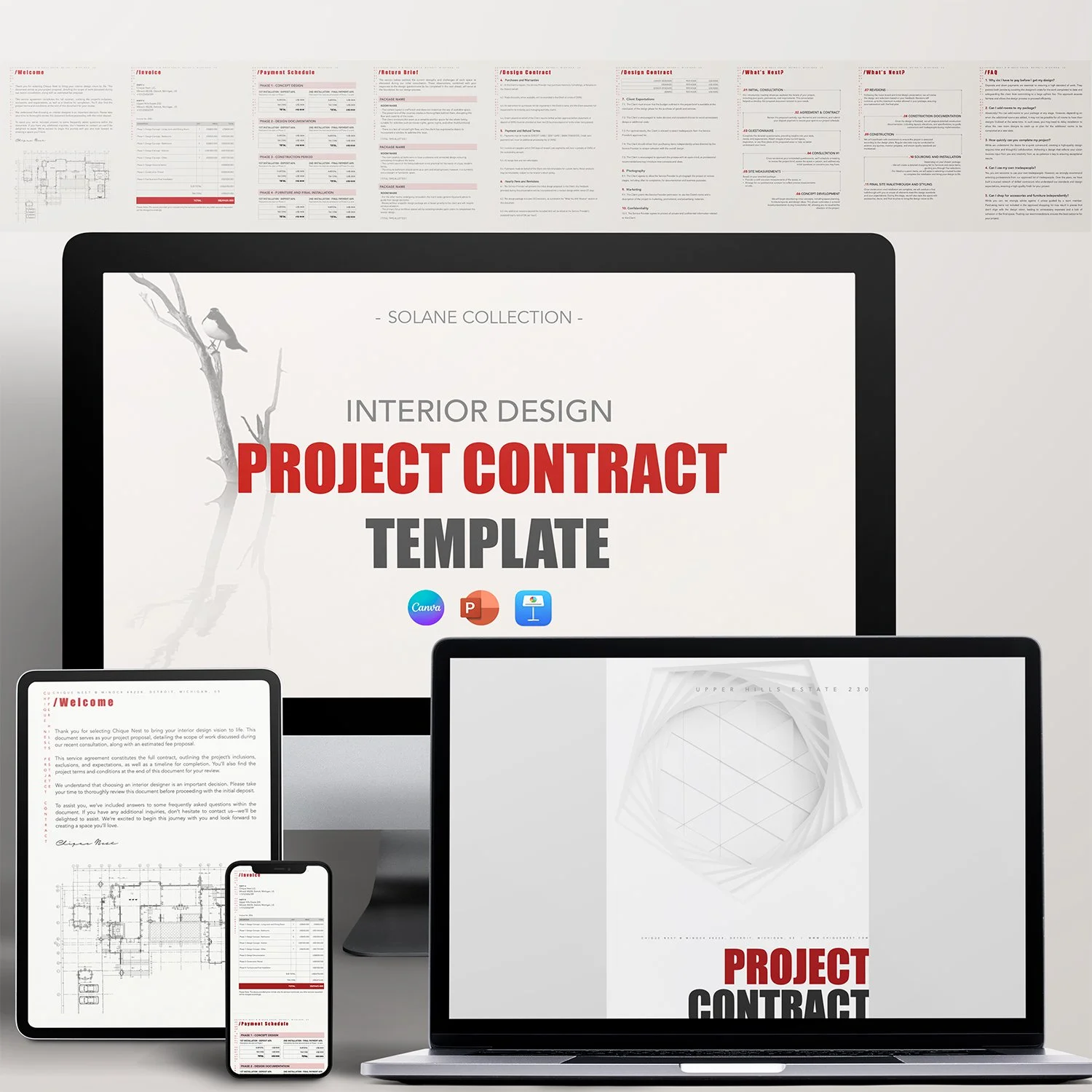
Most difficult client exits trace back to unclear expectations at the beginning. Chique Nest's onboarding packs, contracts, and proposal templates set the right terms from day one — so endings, when they're necessary, are clean.

Stop sending clients a plain PDF and hoping it lands. The Chique Nest Project Proposal Template gives you a beautifully laid-out proposal that shares your inspiration, goals, requirements, mood board, and timeline — everything a client needs to say yes.
Tells the Full Design Story: From inspiration and design goals through to project requirements and mood board, clients see your thinking, not just your pricing.
Fully Customizable: Easily tailor fonts, colors, images, and layouts in Canva, PowerPoint, or Keynote to reflect your brand's unique identity.
Visual Project Timeline: A clean 5-phase timeline graphic so clients know exactly what to expect and when.
Past Work Built In: Dedicated "Our Works" pages with room to showcase real projects and client testimonials.
Save Time and Effort: Stop rebuilding a proposal deck from scratch for every new lead — just update the project details.
—— 📨 What’s Included in the download?
You’ll receive:
✅ 5 Files Total
• PDF with Download Link + Instruction Manual
• 1 Keynote Template
• 1 PowerPoint Template
• 1 Canva Template
• 1 PDF Example File by Chique Nest
✅ 17 Fully Editable Pages
—— 🖌️ What’s inside the template?
This comprehensive project proposal includes every section you need to pitch and win a new project:
✔️ Welcome
✔️ Finding Inspiration
✔️ Design Goals
✔️ Project Requirements
✔️ Mood Board
✔️ Project Timeline
✔️ Terms
✔️ Design Process
✔️ Next Steps
✔️ Our Works
✔️ Meet Our Team
✔️ Contact Us
—— 📂 File Format & Compatibility:
Available in Widescreen (16:9) format, this template is compatible with:
✔️ Canva (requires a free Canva account)
✔️ PowerPoint
✔️ Keynote
All elements are fully customizable, including fonts, text, images, and branding.