

How to Use TikTok as an Interior Designer to Attract Clients and Build Authority
TikTok is not the platform for teenagers it was three years ago. It's where a 43-year-old in Manchester watches a kitchen renovation at midnight. It's where a couple in Dubai discovers a designer from Dubai they'd never have found on Google. It's where interior designers with zero ad budget are building real businesses — through nothing more than showing their work, their knowledge, and a little bit of personality.
And yet most interior designers are either not on it at all, or they're on it half-heartedly — posting occasionally, getting disheartened by low views, and concluding it 'doesn't work for them.'
TikTok does work for interior designers. But it works differently to Instagram, and trying to use it the same way is exactly why most designers don't see results. This guide is for designers who are ready to take it seriously — and use it strategically.
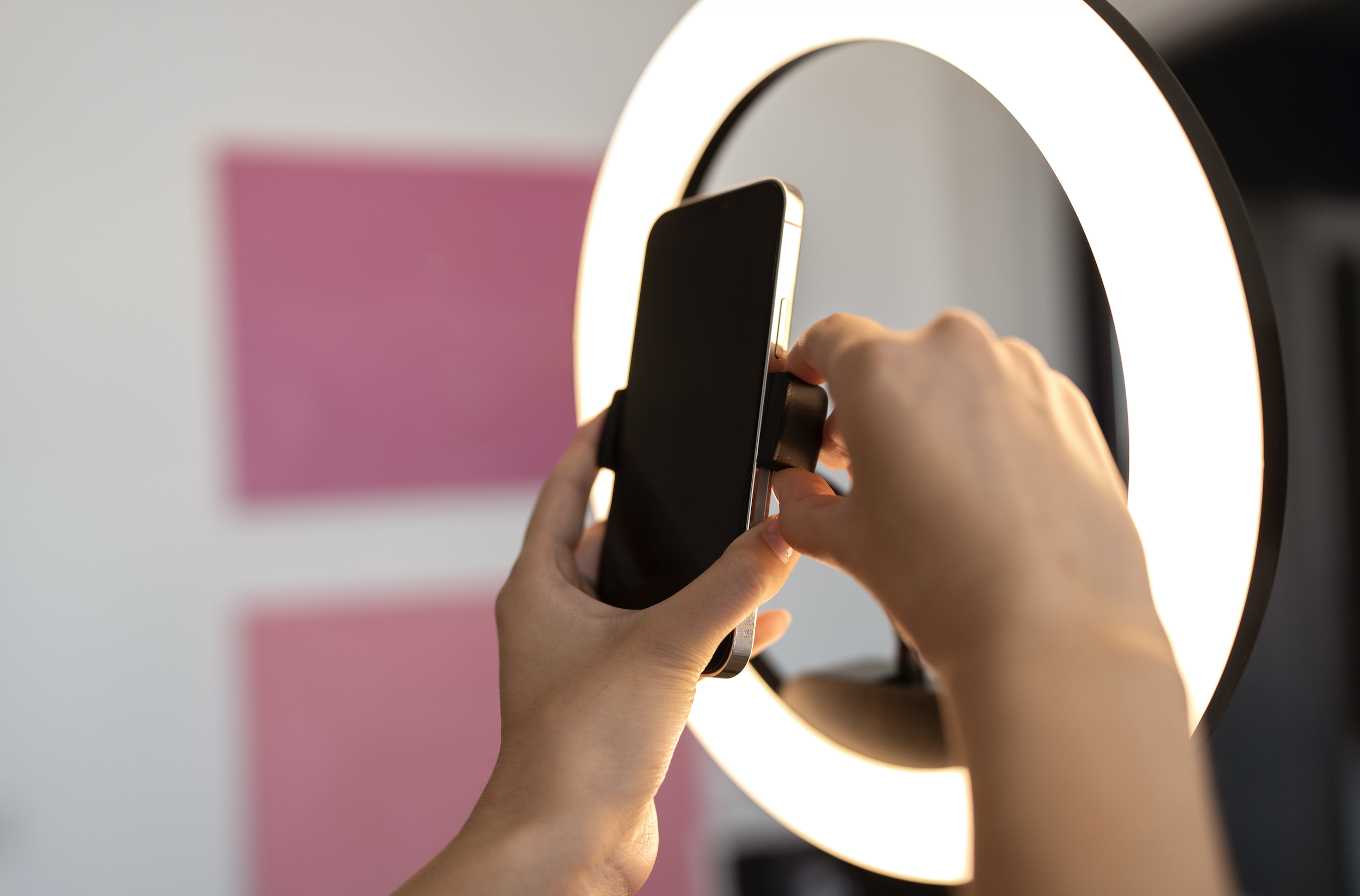
TikTok doesn't reward the most polished content. It rewards the most useful, the most honest, and the most human.
Why TikTok Is Different — and Why That Matters for Designers
Understanding the platform's mechanics isn't optional — it's what separates designers who grow from designers who post into the void. Two things make TikTok fundamentally different from every other platform:
The algorithm shows content to strangers first
On Instagram, your posts are shown primarily to your existing followers. Growth comes slowly through hashtags and shares. On TikTok, every video is shown to a test audience of strangers — people who don't follow you and have never heard of you. If they watch it, engage with it, or rewatch it, the algorithm shows it to more people. This means a designer with 200 followers can get 200,000 views on a single video if the content connects. That's not luck — it's how the platform is designed.
Watch time is everything
TikTok's primary signal is completion rate — how much of your video people actually watch. A video that 10,000 people watch to the end outperforms a video that 100,000 people swipe away from after two seconds. This means your first three seconds are the most important part of any video you make. If you don't hook them immediately, nothing else matters.
On TikTok, your hook is your headline. Your first 3 seconds determine whether the next 60 are ever seen.
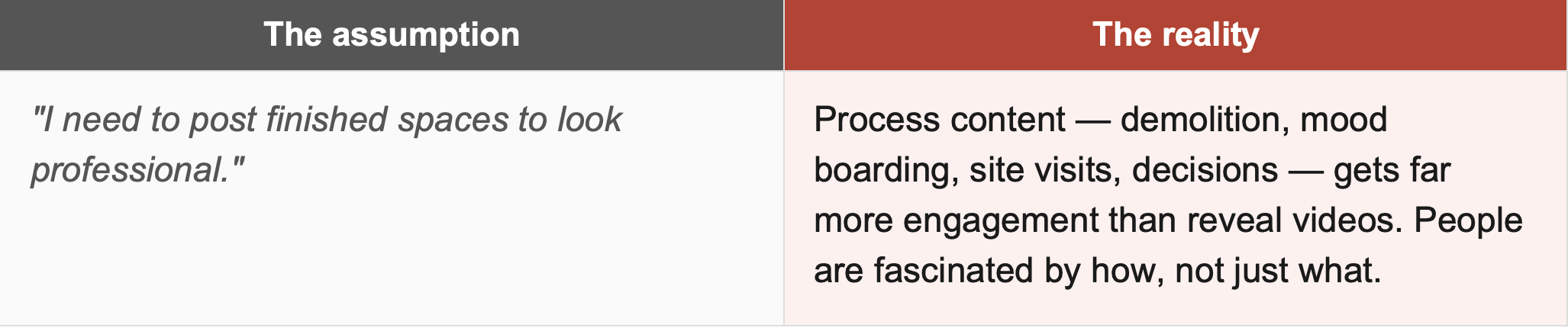
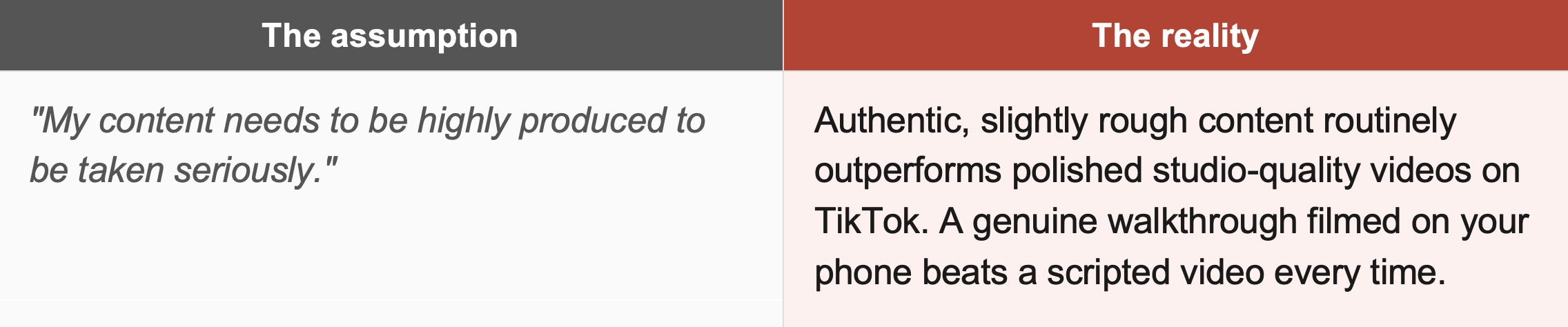
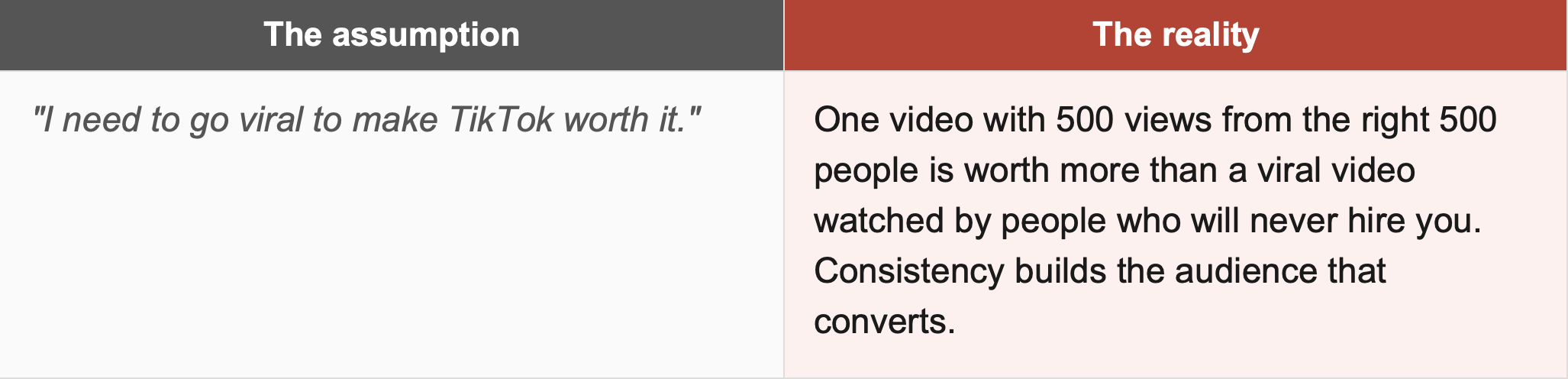
The Four Things Interior Designers Get Wrong on TikTok
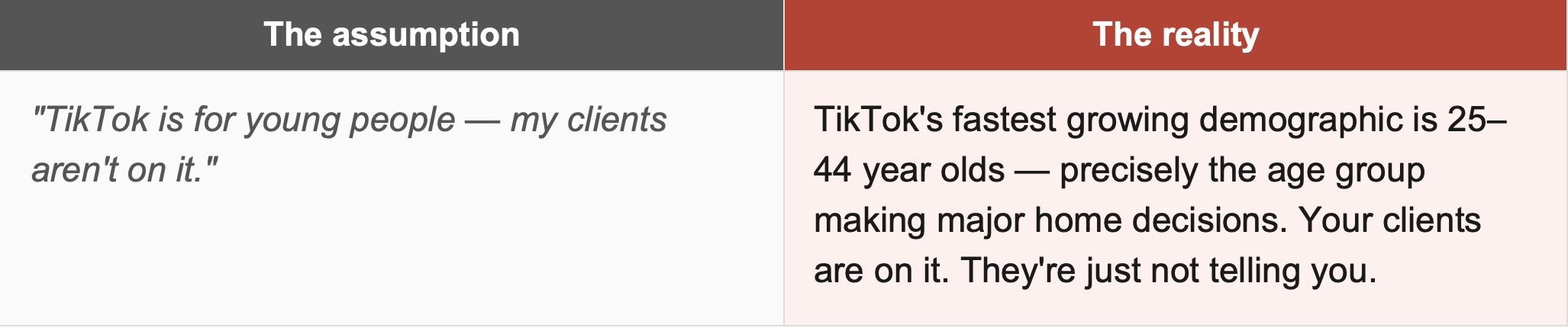
FIND THE RIGHT TEMPLATES FOR YOUR INTERIOR DESIGN PROJECTS
What Actually Works: 8 Content Formats Interior Designers Should Use
These aren't trends that expire — they're formats built on what TikTok rewards: education, transformation, honesty, and expertise. Use these as your content library.
🎬 Before & During & After
Hook: "I'm about to start the messiest part of this renovation — here's what it looked like before."
Format: Three clips stitched together: the space before, mid-construction chaos, and the reveal. Run over 30–60 seconds with voiceover or text overlays.
Why it works:Transformation content is TikTok's most reliable performer. The contrast creates emotional engagement — people stay to see the end.
🧠 Designer Myth-Busting
Hook: "Stop doing this with your furniture layout — it makes every room feel smaller."
Format: Talking head or screen recording. Identify one common mistake. Explain why it's wrong. Show the fix. Keep it under 45 seconds.
Why it works:Positions you as an expert instantly. Highly shareable because viewers tag friends who make the same mistake.
🛒 Budget Breakdown
Hook: "Here's exactly what we spent on this living room renovation — and where the money actually went."
Format: Voiceover over project photos/clips. Break down the real numbers — materials, labour, furniture, contingency. Be specific.
Why it works:Transparency around money is one of TikTok's highest engagement topics. Clients find it refreshing and it builds enormous trust.
📐 Process Walkthrough
Hook: "This is how I approach a blank room — step by step, from site visit to final layout."
Format: Screen recording of AutoCAD or mood board software, or phone footage of a site visit with voiceover. Show the thinking behind the decisions.
Why it works:Demonstrates expertise through process. Attracts the client who wants to understand the value of what they're paying for.
🤔 Would You Rather / This or That
Hook: "Marble countertops or quartz — I asked 100 designers which they'd actually specify. Here's the answer."
Format: Quick-cut or split screen comparing two options. Give your honest opinion. Invite debate in the comments.
Why it works:Low production effort, high engagement. Comments and arguments keep the video visible for longer in the algorithm.
🏠 Room Layout Critique
Hook: "Someone sent me their current living room layout. Here's everything wrong with it — and how I'd fix it."
Format: Share a photo (with permission or a generic stock example). Annotate or talk through the spatial problems and your proposed solution.
Why it works:Highly educational, shows spatial thinking in action, and positions you as a problem-solver rather than a decorator.
📦 Supplier or Product Review
Hook: "I've specified this kitchen brand on three projects now. Here's my honest opinion."
Format: Hold the product, walk around a showroom, or show it installed. Give a real, balanced review — pros, cons, who it's right for.
Why it works:Interior designers are trusted voices on product quality. These videos attract both clients and brands looking for partnerships.
💬 Client Q&A
Hook: "You asked: how long does a full interior design project actually take? Here's the honest answer."
Format: Answer a real question from your comments or DMs. One question per video. Be honest, specific, and conversational.
Why it works:Signals that real people are engaged with your content. Answering questions publicly builds FAQ-style authority content over time.
A Simple Posting Rhythm That's Actually Sustainable
The biggest reason designers quit TikTok is that they try to post every day and burn out within three weeks. You don't need to post every day. You need to post consistently — and consistently for interior designers usually means three to four times a week, planned in advance.
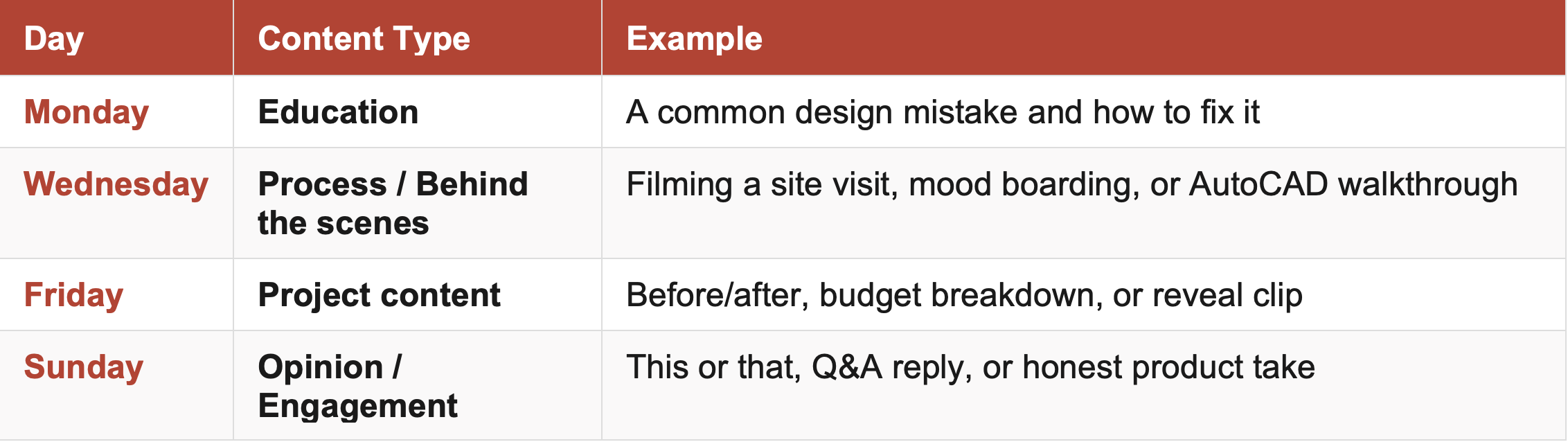
🎥 Batch Film to Stay Consistent
The most sustainable TikTok habit is batching — setting aside two hours every two weeks to film six to eight videos at once. You don't need a different outfit for every video. Film content A, then B in the same session. Edit them across the week. You'll always have content ready, and you'll never feel like TikTok is eating your life.
Turning Views Into Clients: The Part Most Guides Skip
Views don't pay invoices. The question isn't just how to get seen — it's how to convert the right viewers into enquiries. Here's what actually bridges that gap.
Your bio does more work than you think
Most designer bios say something like: 'Interior designer 🌿 London-based ✨'. That tells a viewer almost nothing actionable. Your bio should tell them who you work with, what you specialise in, and what to do next. Something like: 'Interior designer for luxury residential projects in London. DM to enquire about availability.' Clear. Specific. Actionable.
Make your CTA part of the video — not an afterthought
If you want viewers to enquire, say it in the video. Not every video — but your process videos, your project walkthroughs, and your Q&As should end with a clear, natural invitation: 'If you're planning a project like this, drop me a DM or find the link in bio.' It doesn't feel salesy when it comes after you've genuinely delivered value.
Use your pinned videos as a portfolio
TikTok lets you pin three videos to the top of your profile. Use them strategically: pin your best before/after, your most educational video, and something that shows your personality. These are the first three things a potential client sees when they visit your profile after discovering you. Make them count.
Respond to every comment in the first hour
The algorithm rewards engagement — and responding to comments in the first 60 minutes after posting significantly boosts a video's distribution. Beyond the algorithm, a designer who replies thoughtfully to comments builds a reputation for generosity and expertise that followers remember when they're ready to hire.
The goal of TikTok isn't followers. It's trust at scale. Every video is a chance to be useful to someone who might one day become a client — or refer one to you.
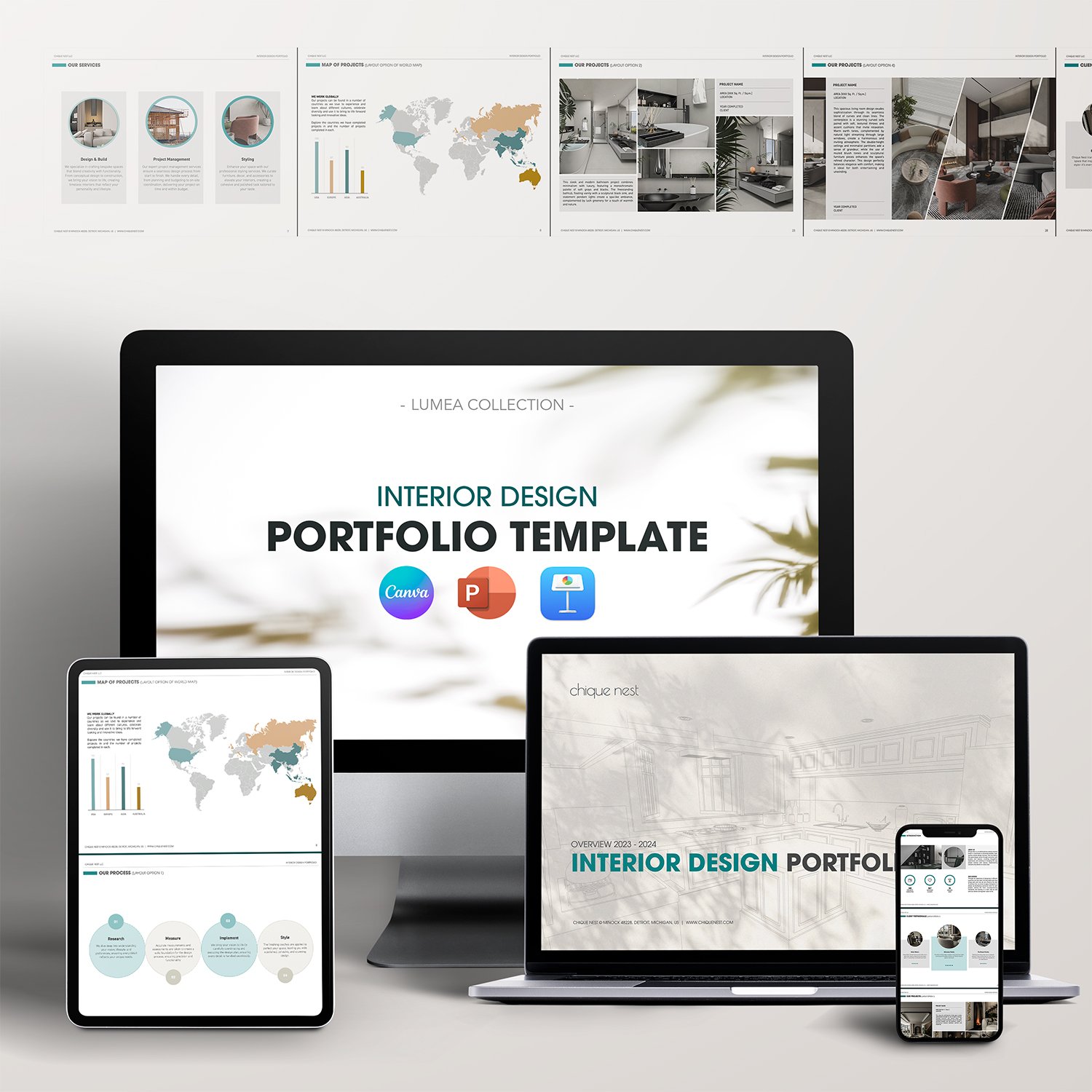
TikTok content that shows your process needs a process worth showing. Chique Nest's AutoCAD blocks, presentation templates, and client materials give you polished, professional work to film — and a business that looks as good behind the scenes as it does on screen.

Simplify your client onboarding process and clearly showcase your offerings with The Lumea Collection Packages & Pricing Template. Designed specifically for interior designers, this template provides a polished and professional way to present your services, pricing, and packages, helping you stand out and build trust with prospective clients.
Clearly Communicate Your Services: Highlight your package options, e-packages, and pricing details in a clean and organized format.
Fully Customizable: Easily tailor fonts, colors, images, and layouts in Canva, PowerPoint, or Keynote to reflect your brand’s unique identity.
Comprehensive and Client-Focused: Cover every detail, from client testimonials to package comparisons, ensuring transparency and building confidence.
Save Time and Effort: With thoughtfully designed layouts and pre-written content, you can quickly create stunning presentations that make a lasting impression.
Professional Presentation: Showcase your expertise and build trust by providing a clear and visually appealing document that simplifies decision-making for your clients.
—— 📨 What’s Included in the download?
You’ll receive:
✅ 12 Files Total
• PDF with Download Link + Instruction Manual
• 4 Keynote Files
• 4 PowerPoint Files
• 2 Canva Templates
• 1 PDF File
✅ 16 Fully Editable Pages in Two Beautiful Themes:
1. Golden Elegance
2. Turquoise Modern
—— 🖌️ What’s inside the template?
This comprehensive packages and pricing template includes all the sections you need to professionally present your interior design business:
✔️ Welcome
✔️ About Us
✔️ Client Testimonials
✔️ Our Team
✔️ What’s Next?
✔️ What to Expect
✔️ Packages Options
✔️ E-Packages Options
✔️ Packages Comparison
✔️ E-Packages Comparison
✔️ Questions & Answers
✔️ Contact Us
—— 📂 File Format & Compatibility:
Available in both Standard (4:3) and Widescreen (16:9) formats, this template is compatible with:
✔️ Canva (requires a free Canva account)
✔️ PowerPoint
✔️ Keynote
All elements are fully customizable, including fonts, text, images, and branding.