

From Side Hustle to Full-Time: How to Make the Leap as an Interior Designer
You're doing it on the side right now. Maybe around a day job, maybe around kids, maybe around another career that pays the bills while interior design pays something else — in satisfaction, in creative energy, in a quiet sense that this is what you're actually supposed to be doing.
And somewhere in the back of your mind, the question sits: when? When is the right time to go all in? When do you have enough clients, enough savings, enough confidence to make the leap?
The honest answer is that there's no perfect moment. There's a right moment — and it's different for every designer. But it's not random either. It's something you can identify, prepare for, and move toward deliberately.
This guide is the one I wish existed for every designer who's ready to stop treating their talent like a hobby and start building the business it deserves.
The leap isn't a single decision. It's a series of smaller ones that make the big one feel inevitable.
The Two Ways Designers Get This Wrong
Most designers who struggle with the transition to full-time make one of two opposite mistakes.
Mistake one: Jumping too soon
Driven by excitement, frustration with their day job, or a good run of a few projects, they quit before the foundation is in place. No consistent client pipeline. No financial runway. No systems. The first slow month sends them scrambling — back to freelancing in another industry, back to employment, or just anxious and undercharging to keep anything coming in.
Mistake two: Waiting too long
Paralysed by the fear of failure, the need for certainty, the voice that says 'just a few more months.' They keep moving the goalposts — one more project, one more client, one more year of savings. The side hustle stays a side hustle indefinitely, not because it wasn't ready, but because they never decided it was.
The path between these two mistakes isn't luck. It's a set of clear criteria — financial, professional, and personal — that tell you when the timing is genuinely right.
Part One: Getting the Finances Right
Let's start here because it's the part that trips up the most people — and the part that removes the most fear when you actually do the maths.
Know your number
Most designers have a vague sense that they need 'enough money' before going full-time. That vagueness is expensive. Get specific. Calculate your actual monthly personal expenses — rent or mortgage, food, bills, insurance, debt repayments, everything. That's your baseline. Your business needs to reliably cover that number before the transition makes sense.
Build your runway
Before you make the leap, have three to six months of personal expenses saved as a buffer. This isn't pessimism — it's the cushion that means a slow month doesn't become a crisis, and you don't have to take on the wrong clients just to keep the lights on. It also removes the desperation energy that clients can smell from a mile away.
Understand your business costs
Going full-time means your business expenses — software, insurance, accounting, marketing, professional memberships — are no longer absorbed by an employer. Factor these into your required revenue, not as an afterthought but as line items in a real budget.
Here's a simple financial readiness checklist:
I know my exact monthly personal expenses to the nearest £/$ 100
I have 3–6 months of those expenses saved as a runway buffer
I know what my business costs are monthly (software, insurance, etc.)
My current side hustle revenue, if sustained, would cover both
I have a basic financial system — separate business account, invoicing, basic tracking
💰 The Tax Trap
One thing that catches new full-time designers off guard: when you're employed, tax is handled for you. Self-employed, you're responsible for it — and it arrives in a lump sum you need to have saved. Set aside 25–30% of every invoice payment from day one. It feels painful until the tax bill arrives and you have exactly what you need.
FIND THE RIGHT TEMPLATES FOR YOUR INTERIOR DESIGN PROJECTS
Part Two: Professional Readiness
Financial runway buys you time. Professional readiness determines what you do with it. These are the building blocks that should be in place — or actively in progress — before you go full-time.
A portfolio that works hard for you
Your portfolio isn't just a collection of nice photos. It's your primary sales tool, and it needs to be doing two things: showing the quality of your work, and communicating clearly who you work with and what you do. Three to five strong, well-documented projects are worth more than fifteen mediocre ones. If your portfolio isn't there yet, make building it a deliberate goal before the transition.
At least two or three sources of leads
Going full-time with a single source of clients — say, one referral relationship or one Instagram account — is fragile. Before the leap, you want to have at least two or three channels generating enquiries, even if some are early-stage. This could be referrals from past clients, organic social media, a local network, a listing on a design platform, or a partnership with a property professional.
A professional client system
When you go full-time, you're running a business — not just doing design work. That means professional proposals, clear contracts, a defined onboarding process, and an invoicing system that gets paid on time. If any of these are currently informal or ad hoc, now is the time to fix them. Clients at the level you're building toward expect a professional experience from the first interaction.

Part Three: The Mindset Piece Nobody Talks About Enough
Here's the thing about the leap that surprises almost every designer who makes it: the practical stuff — the finances, the clients, the systems — is manageable. You can prepare for it. What's harder to prepare for is the psychological shift.
There's no longer a safety net catching bad decisions
When you're employed, a slow design month is inconvenient. When you're full-time, it has consequences. That's not a reason to stay — it's a reality to walk into with clear eyes. The accountability that comes with full-time self-employment makes most designers sharper, more decisive, and more professional. But the adjustment is real.
Your identity shifts — and that can be disorienting
For many designers making the leap, their day job has been part of their identity — sometimes for years. Letting go of that, even for something better, involves a kind of grief. Give yourself permission to find it strange before you find it liberating.
Self-motivation becomes your most important professional skill
Nobody is telling you to start at 9am. Nobody is assigning you tasks. Nobody is noticing whether you spent the morning being productive or the morning scrolling. The designers who thrive in full-time self-employment build structure deliberately — work hours, weekly reviews, accountability systems — rather than assuming motivation will just appear.
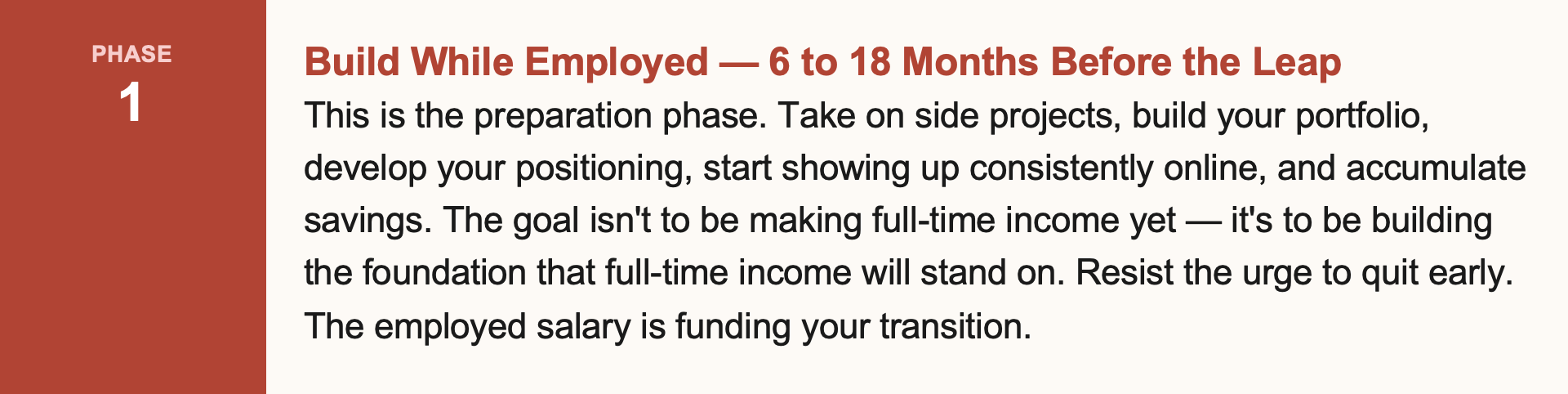
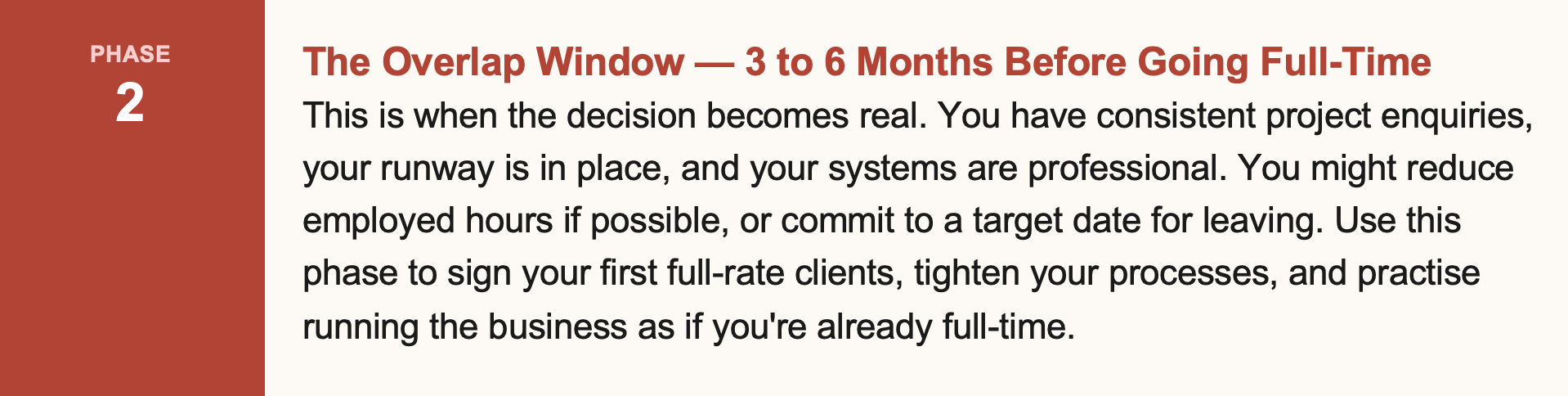
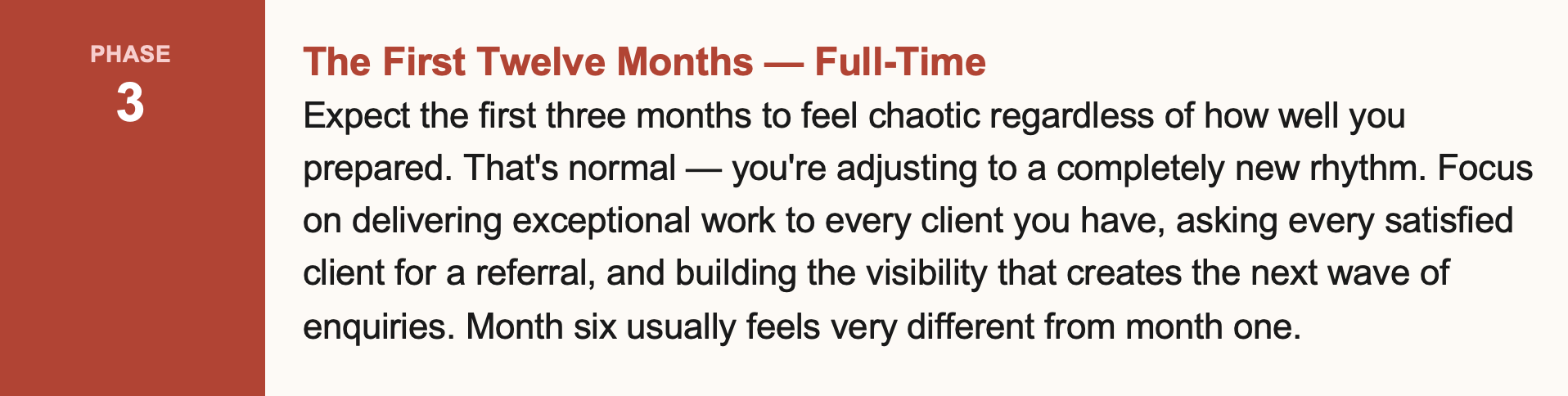
A Realistic Timeline: Three Phases of the Transition
How to Know You're Actually Ready
There's no checklist that gives you certainty. But there are a few signs that the timing is genuinely right rather than just wishful:
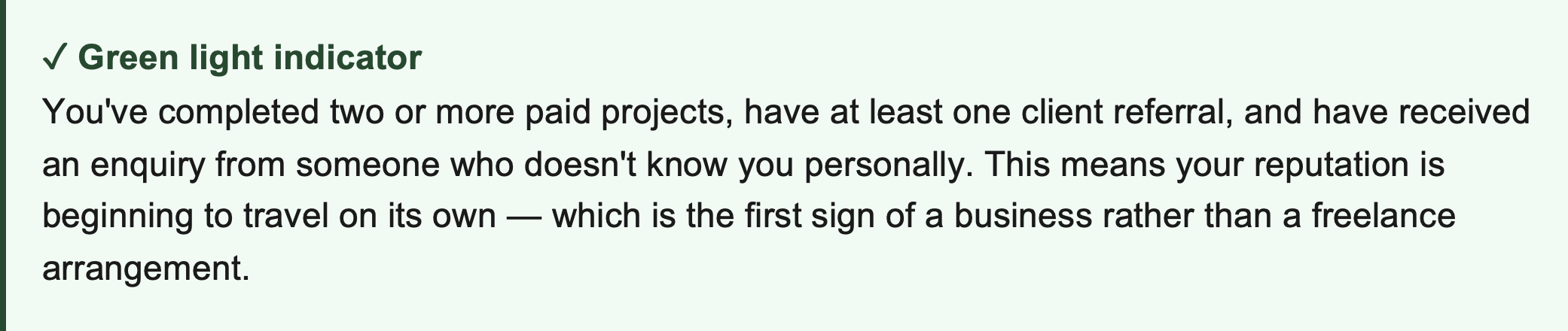
You've turned away work because of capacity — at least once
Your last two or three clients found you rather than you finding them
You're consistently pricing at your intended full rate and clients are saying yes
The thought of staying in your current situation for another two years feels genuinely unacceptable
You have the financial runway and your business costs are accounted for
You have professional systems in place that could handle double your current workload
You don't need all of these. But if four or five resonate — you're probably not waiting for readiness. You're waiting for permission.
🎯 Give Yourself a Date
Vague intentions stay vague. If you're serious about the transition, pick a date — even a provisional one — and work backwards from it. What needs to be true by then? What do you need to do in the next 30 days to move toward it? A date turns a dream into a plan.
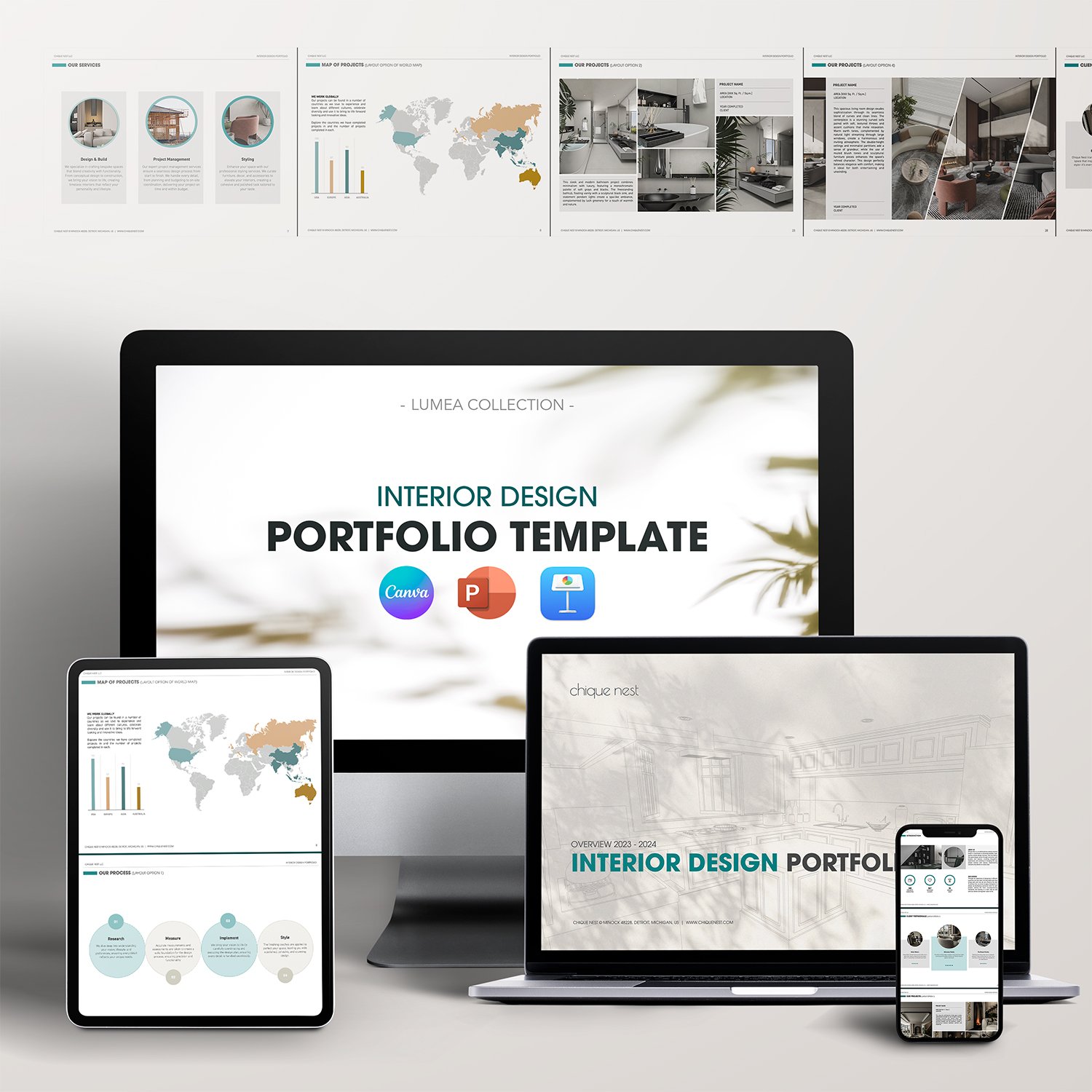
Going full-time means running a proper business — which means professional proposals, polished onboarding, and client systems that reflect the level you're stepping into. Chique Nest's business template library gives you everything you need to show up like you've been doing this for years.

Simplify your client onboarding process and clearly showcase your offerings with The Lumea Collection Packages & Pricing Template. Designed specifically for interior designers, this template provides a polished and professional way to present your services, pricing, and packages, helping you stand out and build trust with prospective clients.
Clearly Communicate Your Services: Highlight your package options, e-packages, and pricing details in a clean and organized format.
Fully Customizable: Easily tailor fonts, colors, images, and layouts in Canva, PowerPoint, or Keynote to reflect your brand’s unique identity.
Comprehensive and Client-Focused: Cover every detail, from client testimonials to package comparisons, ensuring transparency and building confidence.
Save Time and Effort: With thoughtfully designed layouts and pre-written content, you can quickly create stunning presentations that make a lasting impression.
Professional Presentation: Showcase your expertise and build trust by providing a clear and visually appealing document that simplifies decision-making for your clients.
—— 📨 What’s Included in the download?
You’ll receive:
✅ 12 Files Total
• PDF with Download Link + Instruction Manual
• 4 Keynote Files
• 4 PowerPoint Files
• 2 Canva Templates
• 1 PDF File
✅ 16 Fully Editable Pages in Two Beautiful Themes:
1. Golden Elegance
2. Turquoise Modern
—— 🖌️ What’s inside the template?
This comprehensive packages and pricing template includes all the sections you need to professionally present your interior design business:
✔️ Welcome
✔️ About Us
✔️ Client Testimonials
✔️ Our Team
✔️ What’s Next?
✔️ What to Expect
✔️ Packages Options
✔️ E-Packages Options
✔️ Packages Comparison
✔️ E-Packages Comparison
✔️ Questions & Answers
✔️ Contact Us
—— 📂 File Format & Compatibility:
Available in both Standard (4:3) and Widescreen (16:9) formats, this template is compatible with:
✔️ Canva (requires a free Canva account)
✔️ PowerPoint
✔️ Keynote
All elements are fully customizable, including fonts, text, images, and branding.