

How to Niche Down as an Interior Designer (And Why It's the Fastest Way to Grow)
Ask most interior designers what they do and you'll hear some version of: "I design residential and commercial spaces — homes, offices, hospitality, really anything."
It sounds like a strength. More options, more clients, more revenue. Why limit yourself?
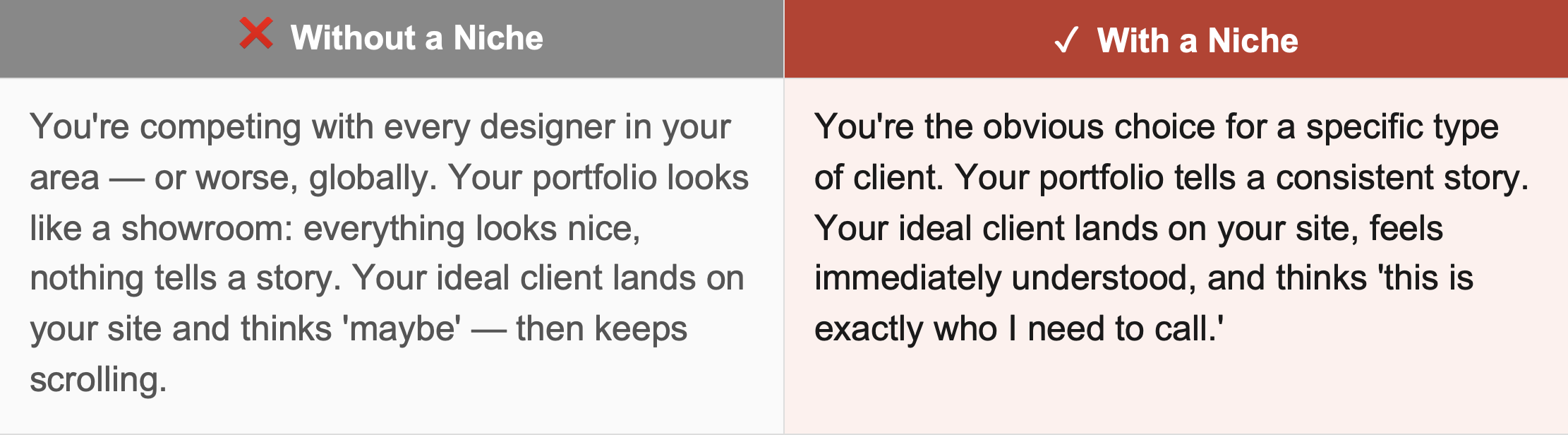
Here's the uncomfortable truth: trying to appeal to everyone is one of the most reliable ways to stay stuck. When your message is for everybody, it lands with nobody. When your portfolio covers everything, it stands out to no one. And when a dream client lands on your website looking for exactly what you do best — they can't tell that you're the right person for them.
Niching down feels counterintuitive. It feels like closing doors. But almost every designer who has done it — deliberately, clearly, confidently — will tell you the same thing: it was the decision that changed everything.

A smaller audience that recognises themselves in your work will always outperform a broad audience that kind of, sort of sees themselves in it.
What a Niche Actually Is (and What It Isn't)
A niche isn't just a style. "I love minimalism" is not a niche. "I design Scandinavian-inspired spaces" is not a niche. Those are aesthetic preferences — and while they can be part of your positioning, they don't on their own define who you work with or what problem you solve.
A real niche sits at the intersection of three things:
A specific type of client — who they are, what they do, what they value
A specific type of project — the scope, scale, or style you specialise in
A specific outcome or transformation — what changes for the client because of your work
When all three align, you stop being "an interior designer" and start being the person they need. The one whose website they bookmark. The one they refer to their friends. The one who can charge more because the alternative is finding someone less right.
Niching isn't about doing less. It's about being known for something specific — so that the right clients can actually find you.
Let's Address the Fear Directly
The most common objection to niching down goes something like: "But what if I turn away clients I could have taken?"
It's a fair concern. But it's based on a scarcity assumption — that there aren't enough clients in a narrower market to sustain a business. For almost every interior design niche, that assumption is wrong.
Consider: if you niche into high-end kitchen design for family homes, you're not competing with every interior designer anymore. You're the specialist. You're the one who knows every kitchen supplier, understands how families actually use cooking spaces, has a portfolio of jaw-dropping kitchens, and can speak to that client's specific situation in a way a generalist simply can't.
That client will pay more for you. They'll refer you to people exactly like them. And your marketing — which now speaks directly to one type of person — will work so much harder than a generic "I design beautiful spaces" message ever could.
💭 The Referral Effect
Niched designers get better referrals. When someone recommends you, they say 'she specialises in luxury family homes' or 'he's the person for high-end home offices.' That specificity means the referral arrives already pre-sold. Generalists get referred too — but with 'she does interiors... or maybe you should just Google someone.'
FIND THE RIGHT TEMPLATES FOR YOUR INTERIOR DESIGN PROJECTS
What Changes When You Niche Down
How to Find Your Niche: 4 Questions Worth Sitting With
Your niche isn't something you invent. It's usually something you uncover — by looking at the work you've already done and the clients you've loved working with. These four questions will get you there.
1. Which past projects did you enjoy the most?
Not which ones looked the best. Not which ones paid the most. Which ones did you look forward to going to work on? Where did you feel most in your element? The work that energises you is usually a signal.
2. Which clients were the best to work with?
Think about a project where the client relationship was genuinely good — they trusted you, the communication was easy, they valued what you brought. What did that client have in common with others you've loved working with? Industry, lifestyle, values, budget level?
3. What do people already come to you for specifically?
Sometimes your niche has already chosen you. Are people referring you specifically for a type of project? Do clients mention having seen a particular piece of work? Is there a room type, a style, a client profile that keeps recurring? That's worth paying attention to.
4. Where is there a real gap in your market?
This is the strategic question. Are there clients in your area or online who aren't being well-served? A particular demographic, budget level, or project type that most designers overlook? Sometimes the best niche isn't where you already are — it's where the demand is underserved.
Niche Ideas Worth Considering
Not sure where to start? Here are some genuinely viable niches for interior designers — each with its own distinct client base and growth potential.
Luxury Residential Renovations
Who it attracts: High-net-worth homeowners undertaking full-home or major renovation projects
Why it works:Premium pricing, full-scope projects, strong referral networks among similar clients
High-End Home Offices & Studios
Who it attracts: Professionals, executives, and creatives who work from home and want a space that reflects their status
Why it works:Growing demand post-2020, clear brief, clients who understand the value of their environment
Family-Focused Design
Who it attracts: Parents who want beautiful spaces that actually function for children and real life
Why it works:Underserved by the high-end market, strong word-of-mouth, highly referral-driven
Airbnb & Short-Term Rental Interiors
Who it attracts: Property investors and hosts who want their rentals to stand out and earn more
Why it works:Clear ROI brief, clients motivated to invest, fast-growing market with repeat business potential
Sustainable & Biophilic Design
Who it attracts: Environmentally conscious clients who want homes that align with their values
Why it works:Differentiated positioning, younger demographic, growing demand with clear premium pricing potential
New Build Specification
Who it attracts: Developers and new-build buyers who need specification support without full interior design scope
Why it works:Volume potential, clear deliverables, strong upsell path to full design services
You Don't Have to Blow Up Your Business to Do This
Nobody is saying you need to fire your existing clients or turn down every project that doesn't perfectly fit your niche tomorrow. Especially if you're building your business or still finding your footing — take the work, do it brilliantly, and let it fund the transition.
The shift can be gradual. Start by making sure your niche is clear in how you talk about yourself — your website bio, your Instagram, the way you describe what you do in conversation. Update your portfolio to lead with the work that reflects your direction. Be more intentional about the enquiries you pursue.
Over time, the referrals start to align. The portfolio tightens. The enquiries get more specific. And one day you'll realise you haven't taken a project outside your niche in months — not because you turned them away, but because the right clients found you first.
🗓️ A Practical First Step
Write one paragraph that describes exactly who you work with, what kind of project you specialise in, and what changes for that client because of your work. Not your style, not your process — the client, the project, and the outcome. If you struggle to write it clearly, that's a signal that the niche needs more definition. If it flows easily, you already know what you are.
The Bigger Picture
The designers who build the most satisfying, most profitable, most sustainable businesses aren't the ones who took every project. They're the ones who got very good at serving a specific type of client — and then told that story so clearly that the right people couldn't help but find them.
Niching down isn't about shrinking your ambition. It's about focusing it. And focused energy, in business as in design, produces better results than energy spread thinly across everything.
You can't be the best option for everyone. But you can absolutely be the only option for someone. That's where the real business is.
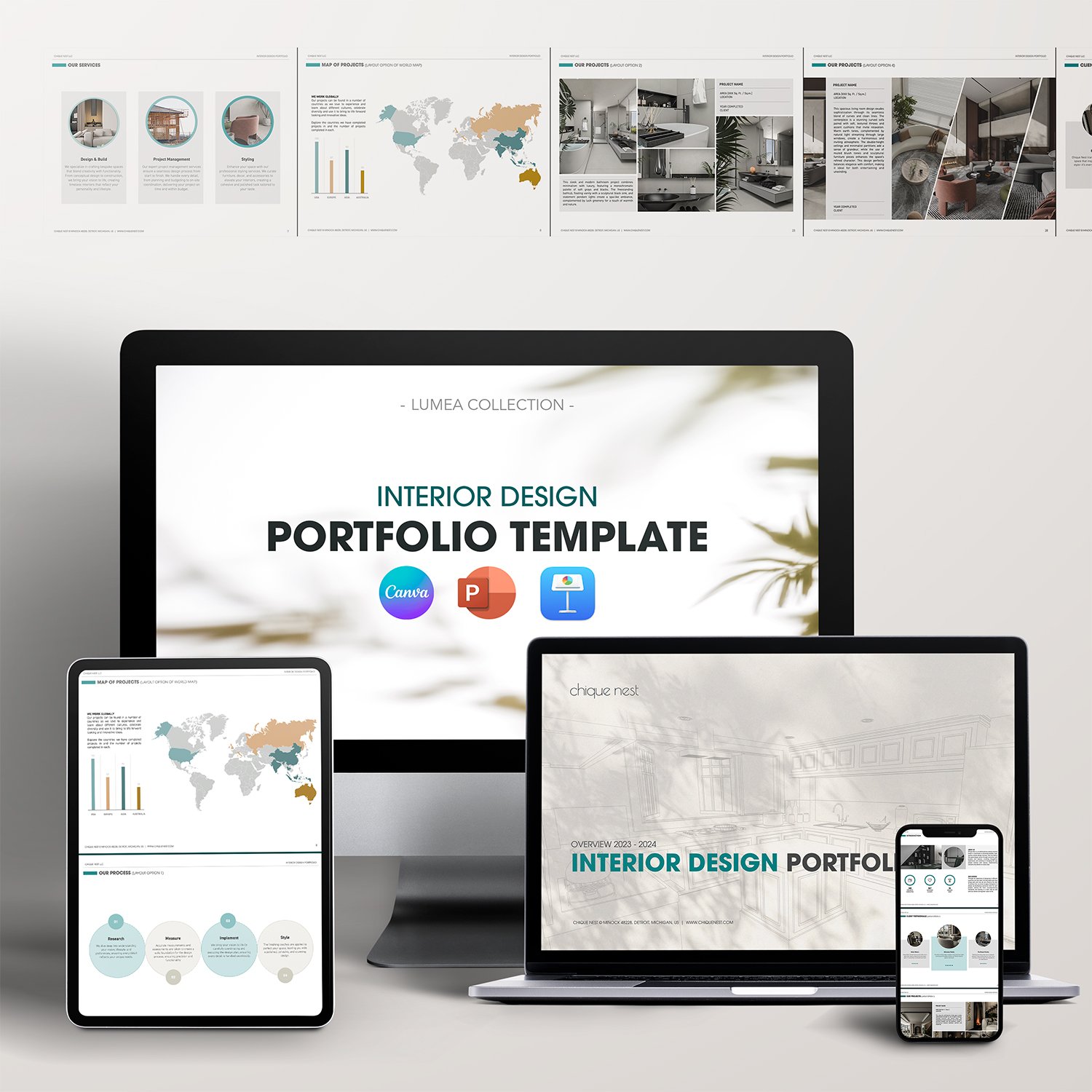
Once you've defined your niche, you need the professional systems to back it up. Chique Nest's business templates — proposals, onboarding packs, fee structures — are built for designers who are ready to work at the next level.

Simplify your client onboarding process and clearly showcase your offerings with The Lumea Collection Packages & Pricing Template. Designed specifically for interior designers, this template provides a polished and professional way to present your services, pricing, and packages, helping you stand out and build trust with prospective clients.
Clearly Communicate Your Services: Highlight your package options, e-packages, and pricing details in a clean and organized format.
Fully Customizable: Easily tailor fonts, colors, images, and layouts in Canva, PowerPoint, or Keynote to reflect your brand’s unique identity.
Comprehensive and Client-Focused: Cover every detail, from client testimonials to package comparisons, ensuring transparency and building confidence.
Save Time and Effort: With thoughtfully designed layouts and pre-written content, you can quickly create stunning presentations that make a lasting impression.
Professional Presentation: Showcase your expertise and build trust by providing a clear and visually appealing document that simplifies decision-making for your clients.
—— 📨 What’s Included in the download?
You’ll receive:
✅ 12 Files Total
• PDF with Download Link + Instruction Manual
• 4 Keynote Files
• 4 PowerPoint Files
• 2 Canva Templates
• 1 PDF File
✅ 16 Fully Editable Pages in Two Beautiful Themes:
1. Golden Elegance
2. Turquoise Modern
—— 🖌️ What’s inside the template?
This comprehensive packages and pricing template includes all the sections you need to professionally present your interior design business:
✔️ Welcome
✔️ About Us
✔️ Client Testimonials
✔️ Our Team
✔️ What’s Next?
✔️ What to Expect
✔️ Packages Options
✔️ E-Packages Options
✔️ Packages Comparison
✔️ E-Packages Comparison
✔️ Questions & Answers
✔️ Contact Us
—— 📂 File Format & Compatibility:
Available in both Standard (4:3) and Widescreen (16:9) formats, this template is compatible with:
✔️ Canva (requires a free Canva account)
✔️ PowerPoint
✔️ Keynote
All elements are fully customizable, including fonts, text, images, and branding.